I sat down this morning to announce something.
The post was going to announce a video series — a walkthrough of the system I’ve been building to run all of Weathered Sailor’s social in one place. I had the angle. The arc. The whole thing. Two paragraphs in, I deleted it.
Not because the work isn’t real. Because the video series isn’t. It doesn’t exist yet — not a single frame — and I was about to promise it to you anyway. I’ve done that before.
Earlier in my career — and really, earlier in my life — I worked the other way around: build the thing first, share it after. Make, then share. Somewhere later — most of all by the end of my last job — I flipped it. I started leading with the plan instead of the outcome, and a lot of those plans quietly never got built. There’s probably a spreadsheet somewhere with my name on it and a note that says something like “next round, let this one go.” I gave a lot of previews for movies that never came out. (There’s even research on it — a 2009 NYU study found that people who announce an identity-level goal and get noticed for it tend to follow through less than the ones who stay quiet. Sometimes saying it can start to feel like doing it. That tracked.)
So — no promise of a series. But I can show you what’s actually been built, because that part is done.
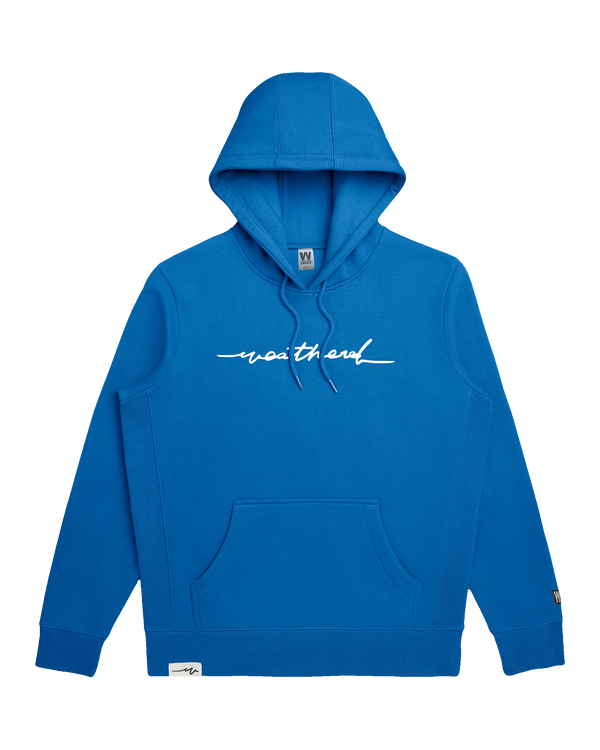
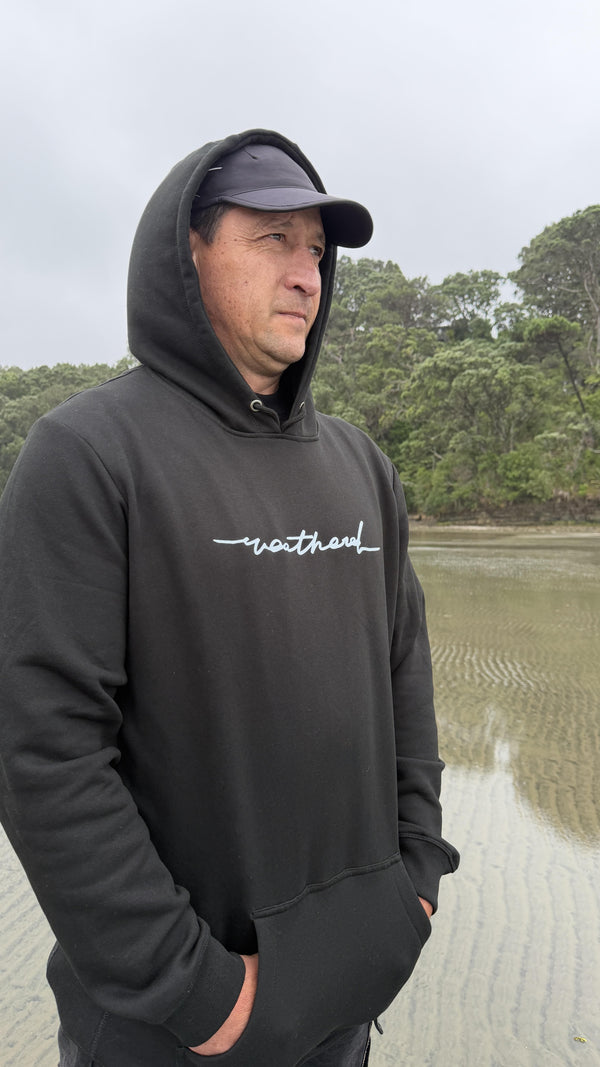
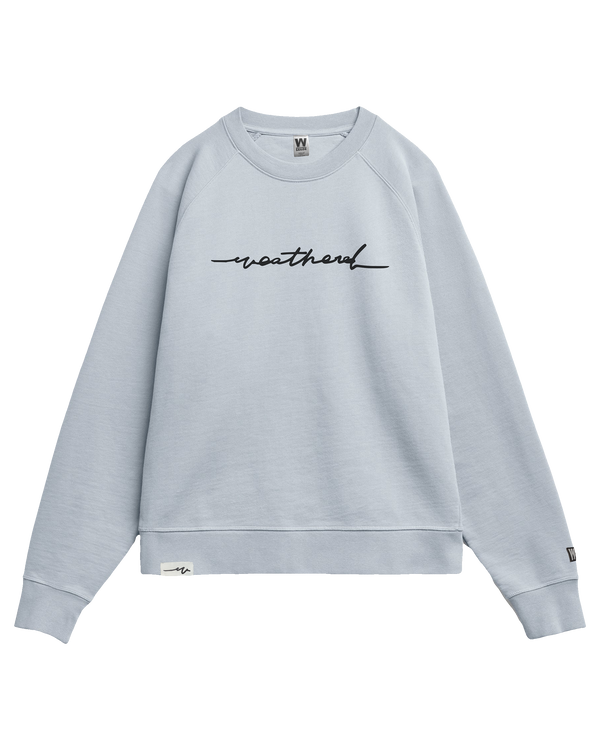
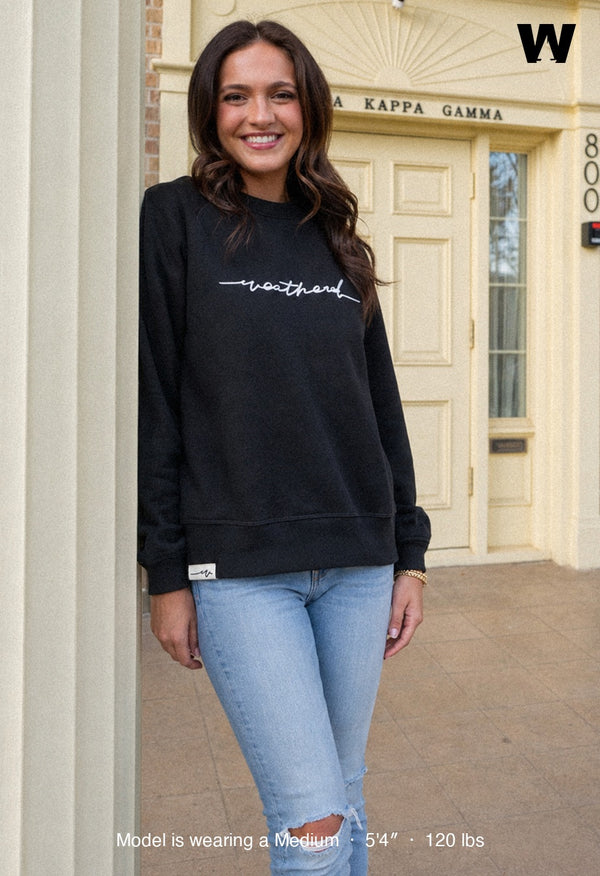
Here’s why I’m on all those channels in the first place. I’m not trying to talk anyone into buying a sweatshirt. I’m trying to build a community out of the content and the presence itself — people who genuinely connect with what this brand is about — and to make sure anyone who does support us knows exactly what that support goes toward. I never want someone to buy something and have no idea what they just became part of.
And to be clear — I’ll still take and genuinely appreciate every sale we get, for all the good it does beyond the sale itself, whether that buyer ever engages with the community or even notices the rest of it. Community and awareness are what I’m building. The sales are always welcome along the way.
The hard part was doing that across every channel, alone. I run all of them myself — Instagram, TikTok, Facebook, Threads, Pinterest, LinkedIn, YouTube, the email list, and the blog — and each one wants a different brain. What to post here, when to post it there, how to give it a real shot at landing, how to read what happened after, when to change course. I was carrying all of that in my head, all day, mostly not enjoying it, and not feeling like it was building the thing I actually wanted it to build. That’s a bad loop to be stuck in.
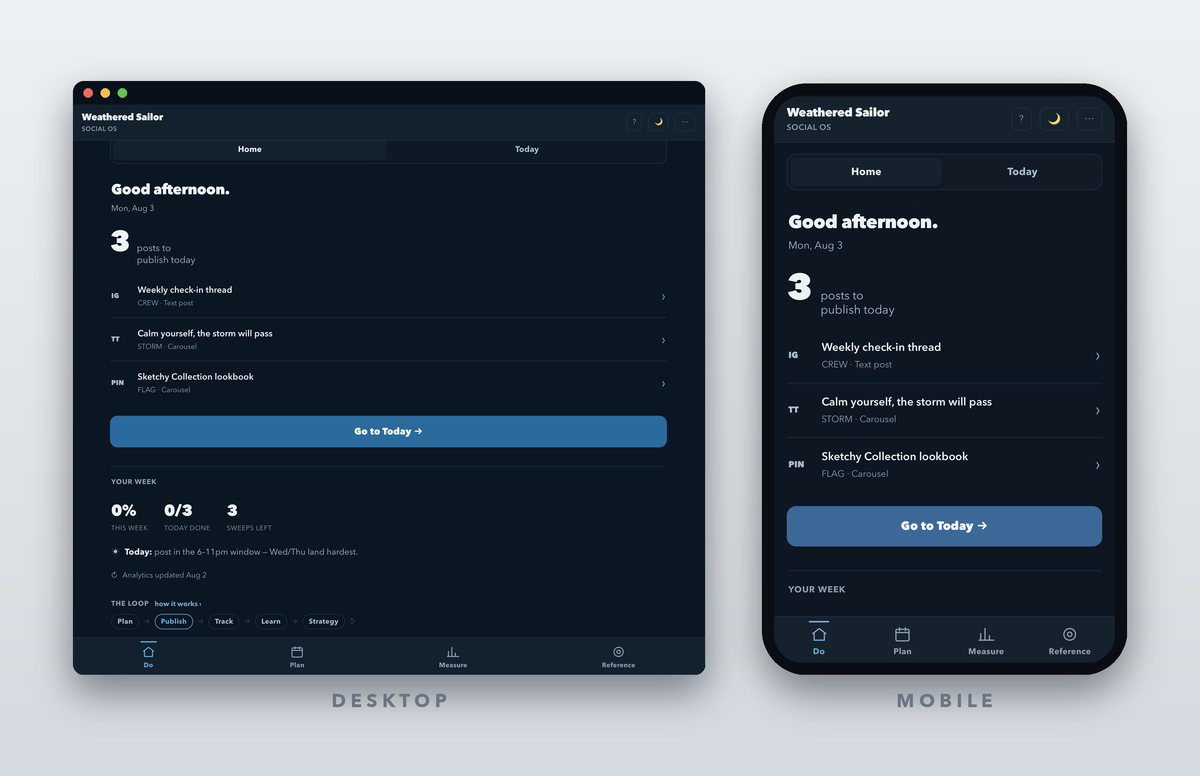
So I did the thing I used to do. I went deep first — research, teardowns of what actually moves on each platform, a pile of notes and insights — and then I stopped thinking about it and started building. What came out is a system that pulls the core of it into one place, starting with the social platforms that were eating the most daily decisions: plan the content, publish it, track what happens, learn from it, feed that back into strategy — and around again. One flow, instead of a dozen open tabs and a tired guess.
A few choices I made on purpose, and why:
- It packages everything, then I post by hand — because that’s how the platforms force it to work. And this is the part that drives me a little crazy. Every platform has its own unwritten rules, and they change without notice. On one, the link has to go in your own first comment instead of the caption, or the algorithm quietly buries you. On another, the downstream automations only fire if that first post is made by hand, inside the app — automate it and the whole chain breaks. Different logic on every channel, all of it shifting under you. So the tool takes me right up to the trigger, and I pull it — not because I want to, but because that’s what actually works.
- It’s built around the community, not a buyer profile. An early version leaned on lazy assumptions about “the customer.” I rebalanced it around the actual community I want to build — everyone this brand is for — because presence and connection come first, and the rest follows from that.
- It’s been through a lot of versions. Almost everything I built first was wrong in some small way. Fixing those in daylight is the entire point.
Where it stands right now: it’s real, it lives on my phone, and it’s had more revisions than I can count. And tonight, for the first time, I’m going to actually use it to run my posting for real. Not a product launch. A soft launch to an audience of one — me. I’m my own first test.
Here’s the only forward-looking thing I’ll commit to, and it’s small: I’ll report back with what actually happened. Not what I hope happens — what happens. The wake, not the plan. If it works, I’ll show the receipts. If it flops, I’ll show that too, and what I changed.
That’s the whole approach now. Build it, use it, then talk.
Back to building.
Study referenced: Gollwitzer, Sheeran, Michalski & Seifert (2009), “When Intentions Go Public,” Psychological Science.