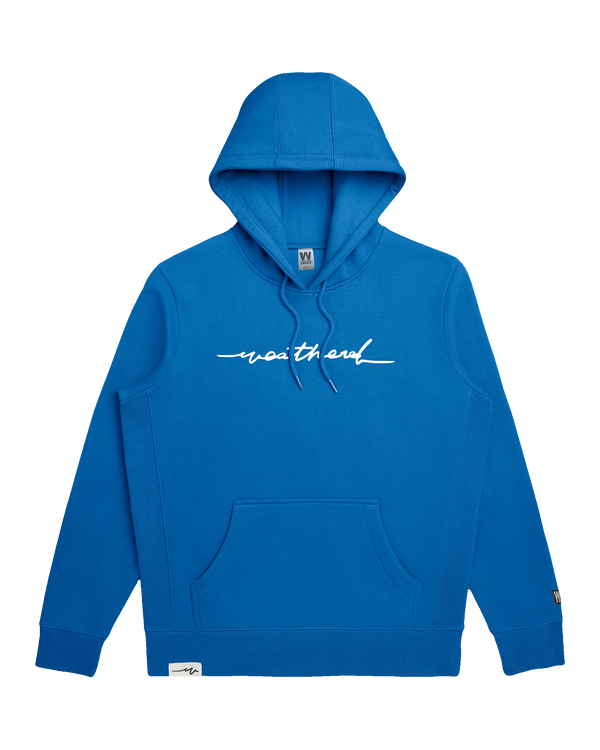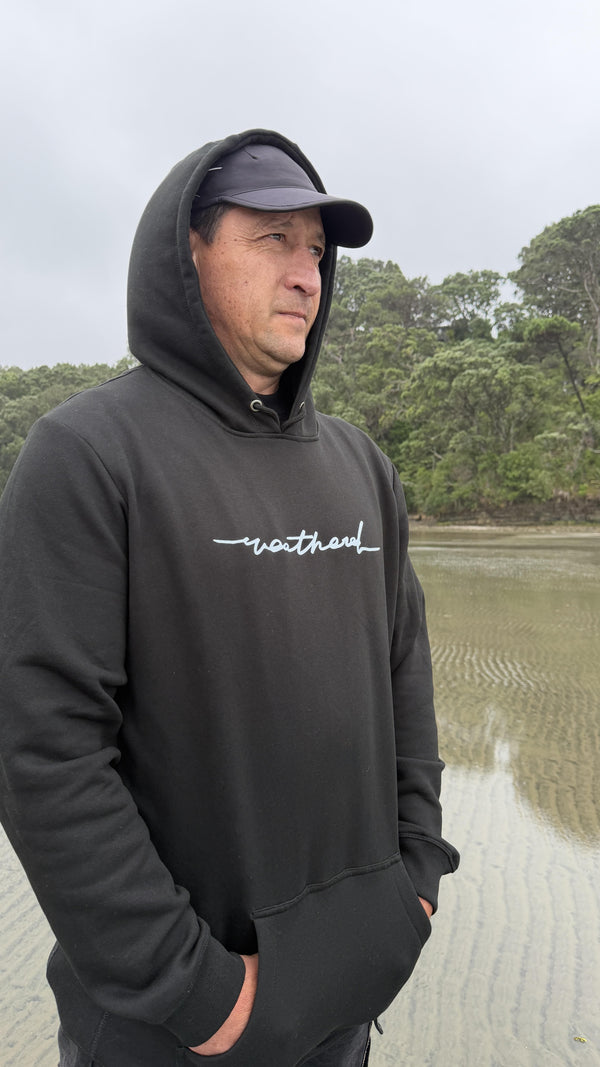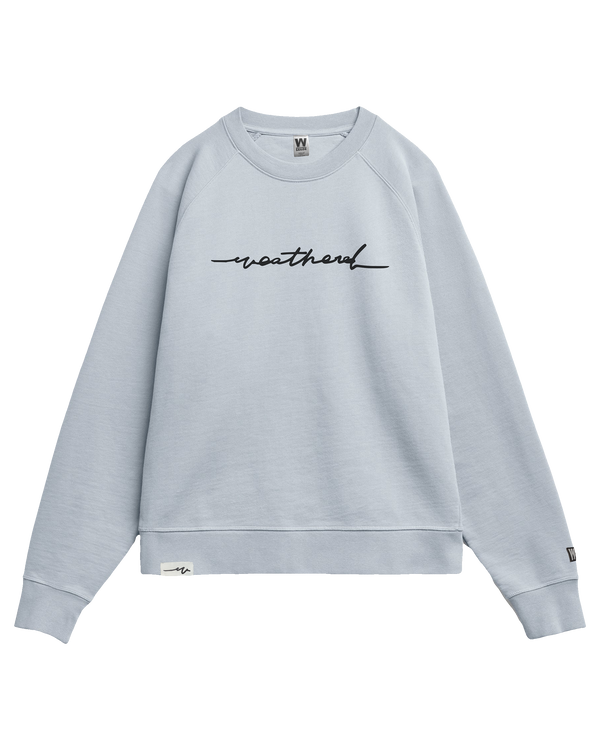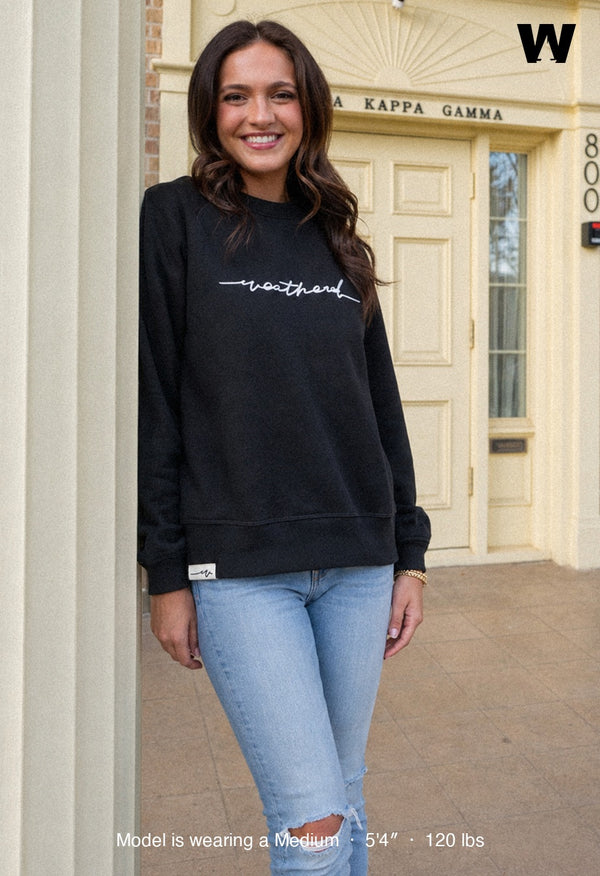
Well, I did it.
At the very least, I can say that.
Actually — there I go already.
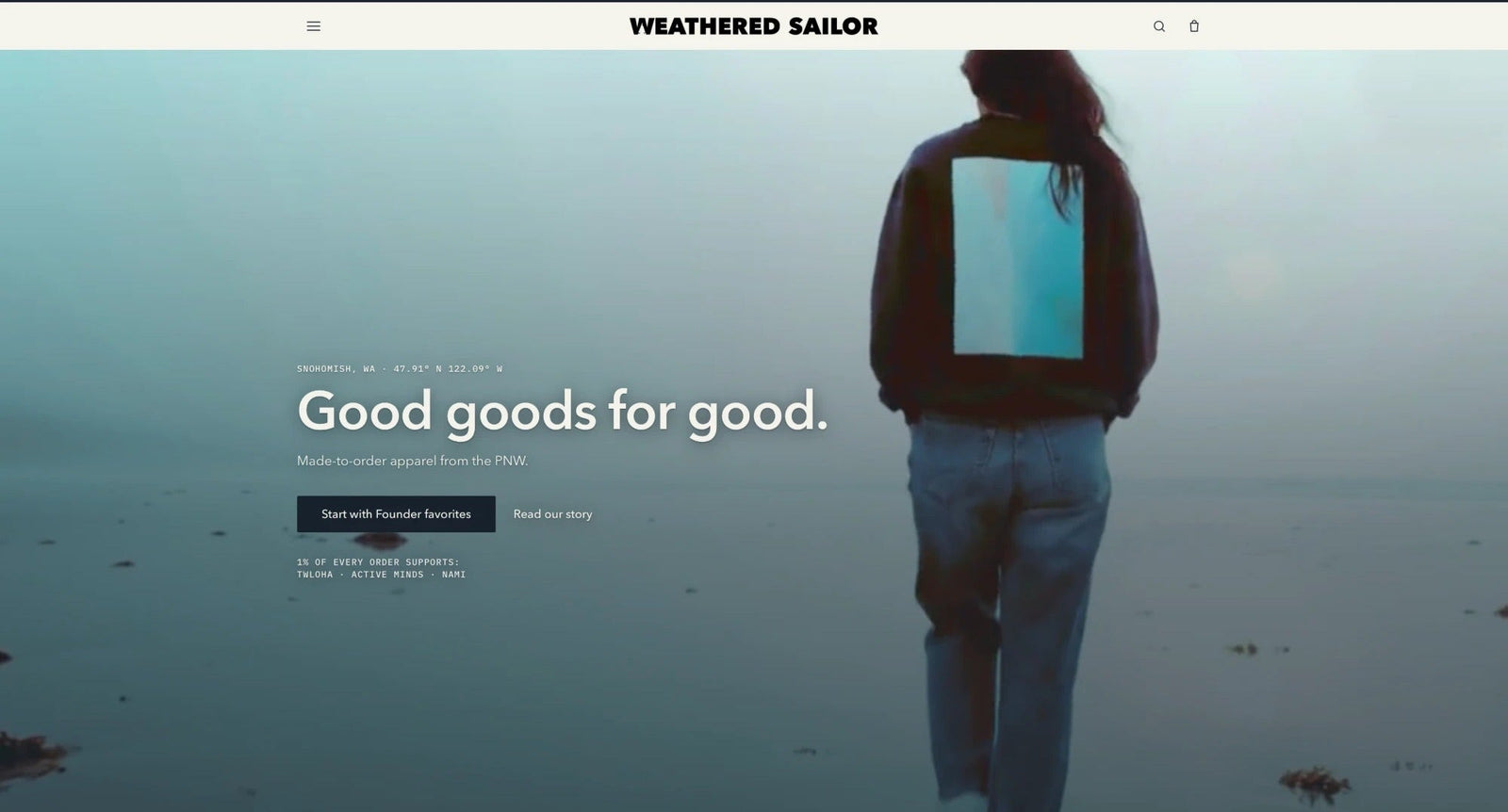
About a week ago I wrote myself a note: 9/1. Everything else can wait. Today is 9/1. The new Weathered Sailor is live.
What did I do? I set a deadline to completely rethink, redesign, rebuild, and launch the Weathered Sailor website — without showing up with much of the specialized knowledge the work would end up demanding.
What I had were ideas. Images in my head. How I wanted the brand to look. How I wanted it to feel. How I wanted someone to move through it — and understand it without having to work so hard to. What I wanted the products to prove before the mission ever asked them to mean anything.
How the whole thing could become a real-world vehicle for reaching some goals, making meaningful connections with people, and putting a little good back into the world.
I just had to find a way to get all of that out of my head and into something another person could actually walk into.
Some of the ideas were visual. Some were emotional. Some started as plain irritation:
- Why can't a product page tell you when your piece will actually arrive?
- Why do so many brands talk about giving without ever showing the math?
- Why can't the quiet corners of a store — the empty cart, the return policy, the order email — sound like they came from the same human who wrote the homepage?
- Why can't you ask a brand for a piece you wish existed, and actually show it what you mean?
- Why does selling have to lean on fake urgency, countdown clocks, and "only two left" when every piece is made after you order it?
- Why shouldn't every symbol have a reason to exist?
- And why shouldn't a brand write its promises down clearly enough that people can hold it to them?
Today, someone can land on Weathered Sailor and start from the garment they actually wear, or the symbol that means something to them. They can learn what a fabric is called, what it weighs, how a piece is built and decorated, how it measures, how it should fit, and how to care for it.
They can step into the Fitting Room — still in beta — enter their height and weight, and get a suggested size and representative preview. They can see an honest, product-specific arrival window before they buy. They can also see, on a map built from actual fulfillment data, where orders have traveled and how long they took to arrive.
They can build and submit an idea for a piece they wish existed. They can read exactly how returns work, where AI is used in our imagery and why, how artwork rights are handled, how the 1% is calculated, and how much has been set aside so far.
They can read the standard I'm holding the company to, the story underneath it, the meaning behind the marks, and whatever I'm working through here in the Log. And when something doesn't make sense, they can reach a real person.
That reads like a list of features. It wasn't. It was a list of problems.
Brand problems. Product problems. Fit problems. Writing problems. Merchandising problems. Shipping problems. Trust problems. Policy problems. Privacy problems. Accessibility problems. Data problems. Accounting problems. Technical problems. And a healthy number of problems I didn't know were problems until I'd created them.
At a multi-million-dollar apparel company, that work gets split across an org chart: brand strategy, creative direction, art direction, copywriting and editorial, apparel and technical design, textiles, fit, merchandising, ecommerce and UX, Shopify and front-end engineering, systems integration, logistics, analytics, lifecycle marketing, loyalty, customer support, legal and claims, privacy, impact accounting, SEO, accessibility, performance, QA, and release.
That isn't one job. It's work a funded brand would distribute across employees, agencies, vendors, and specialist partners.
Some of what came out the other side, I'm genuinely proud of. A fabric system — ten named cloths, with real weight, fiber content, and construction details carried through the relevant product experience, so the material means something before the story ever does. A catalog you can shop three ways: by garment, by symbol, by cloth.
An animated map that turns our actual fulfillment — how many days to your door, how many states so far — into something you can see instead of a promise you have to take on faith.
A written selling standard — the Calm Harbor Standard — that says out loud what we won't do: no strikethrough theater; no manufactured scarcity; never use someone's mental health as an urgency tactic. A giving tracker doing the math in the open. And a machine-readable store guide designed to help emerging AI shopping tools understand the products, policies, and paths through the site accurately.
I did it on my own. Well — kinda.
I did it with Reggie and the team: a group of AI collaborators, each given a role, a standard, a set of responsibilities, and permission to disagree with me. They helped me research things I didn't understand yet, turn opinions into requirements, design and write, build and test, argue through contradictions, break things, fix things, and keep the whole from collapsing into a pile of unrelated good ideas.
But there was no "make the site" button. They didn't decide what Weathered Sailor should be. They didn't decide what mattered most. They didn't make the final trade-offs. They didn't own the claims, the promises, the risks, or the consequences of what went live. I did.
AI didn't make me five people. It let one person coordinate more kinds of work than one person could realistically have reached before — and it left me squarely responsible for making all of it into one coherent thing.
I'm not claiming I became a great designer, developer, apparel expert, lawyer, merchandiser, or analyst. I'm definitely not.
The accomplishment isn't expertise. It's that the work didn't disappear just because I couldn't hire the org chart.
I had to learn enough to ask the right question, to recognize when a confident answer was bullshit, to see how a decision in one corner could quietly break trust in another, to keep revisiting what I thought I knew, to make the call, and to keep going until the thing worked.
Which brings me back to the sentence I keep trying to write. At the very least, I did it.
The last two or three years of building Weathered Sailor — on top of everything life has thrown at my wife and me — have held a lot of "all things considered." Sometimes that phrase is just necessary context. Sometimes it's honest perspective. And sometimes it's a discount I quietly apply to my own work before anyone else gets the chance to see it at full price.
I'm pretty sure that's what I've been doing here.
I'm not going to dress the hard parts up. Hard is hard. Some of it has been painful and unfair and heavier than either of us should have had to carry, and I don't need to turn any of that into a tidy lesson to justify what came after it.
But I also don't need to shrink what I made in the middle of it. I did more than I thought I could while carrying more than I wanted to.
That isn't "at least." All things considered belongs in the story. It doesn't have to become an asterisk after the achievement.
So the more honest sentence is: I did it.
There's one more word I owe you some honesty about. Finished.
I've spent weeks saying I needed to finish the site. And today, it's "finished." Except it isn't. It never will be. Finished is a useful word when you need to ship. Complete is something else.
Tomorrow I'll find a sentence that needs changing. Someone will use something in a way I didn't expect. A feature will need another pass — the Fitting Room, for one, is live in beta and still being improved.
The business will change. The technology will change. What I understand will change. I'll change.
Being unfinished doesn't mean the deadline was fake or the achievement is half-real. It means the thing is alive.
That's the whole idea underneath Weathered Sailor, really. It was never that we arrive at some spotless final version where nothing hurts, nothing shifts, and nothing's left to figure out. Being weathered isn't the same as being done.
As long as we're here, we're still becoming whoever we're going to be next. None of us is ever finished becoming ourselves while we're still here.
And my hope is to build a Weathered Sailor that eventually outlasts me — not just a logo or a store that stays online, but something that keeps creating real connections, helps people feel seen, supports the people doing the hard work of helping others, and keeps putting a little more good into the world long after I'm no longer the one pushing every button.
But today, I hit the deadline. The site is finished enough to be real. It exists outside my head. Anyone with an internet connection can walk into it.
I set the date. I did the thinking. I made the decisions. I built the thing. I shipped it.
And I did it.
Not "at least." I did it.
I'm going to try to let that sentence stand on its own — with a smile I'm working harder than I probably should to keep on my face right now. :)
Thanks for reading.