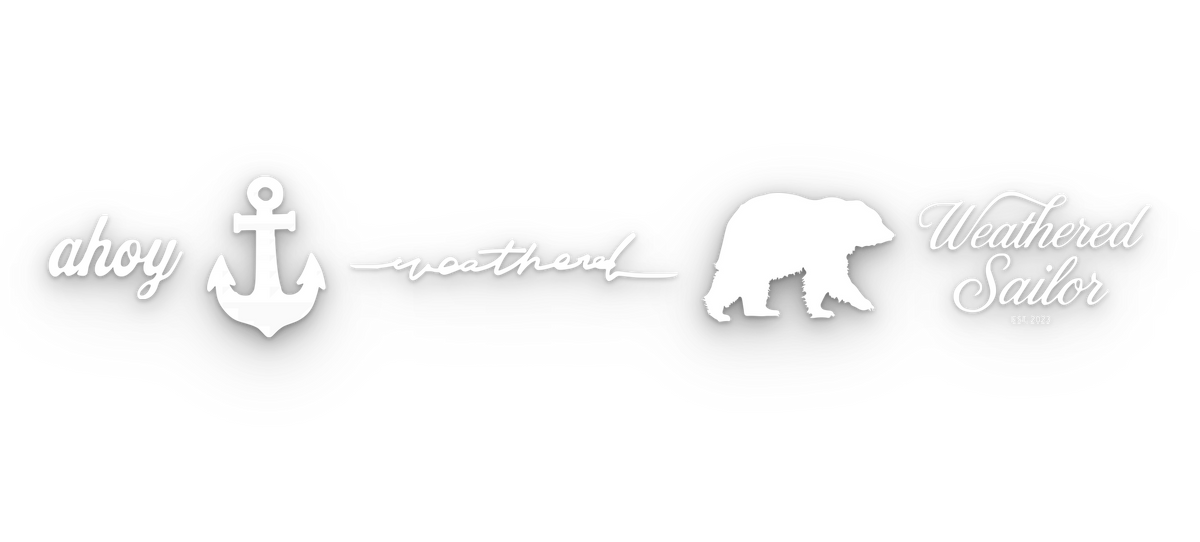
If you've spent any time with our gear, you've probably noticed the marks aren't just decoration. That's the whole point. None of them is an empty slogan or a cause printed loud just to be seen. Some sit bold across the chest, some are tucked small on a sleeve — but every one of them is there to mean something to you, whether or not anyone else ever asks about it.
There are five of them: ahoy, the anchor, sketchy, the Bear, and script. None is a slogan. Each is closer to a reminder, and each points at a different kind of work — some of it outward, some of it inward. None of this comes from an expert. It comes from lived experience, and the hope that some of it resonates with yours.
Here's what each one means.
 ahoy — seeing each other deeper
"Ahoy" is two things at once. It's the simple hello between sailors. It's also an old call to look closer at something in the distance and care about what you see. Both meanings live in the mark — and honestly, we could all use more of the second one. Seeing people a little deeper, and caring about what we see. So when you're wearing ahoy, you're saying hello to the weathered sailors around you, the ones you know and the ones you haven't met yet, and you're saying you want to see them for who they really are.
 the anchor — what keeps you steady
None of us stays steady on our own. We all need reminders that keep us anchored to what actually matters, and the willingness to spend time there — working on ourselves, on how we see the world around us, on how to live well and help the people near us do the same. Wearing the anchor can mean a few things at once: that you've already found what keeps you anchored, that you're still searching for it, or that you're nudging another sailor to find theirs. Any of those is the point.
 sketchy — room for your imperfections
The sketchy wordmark is hand-drawn on purpose. The imperfection is the message. We all have flaws, and that isn't just OK — it's worth seeing them, giving them a name, and then either working on them or embracing them as part of who you are and what makes you you. More often than people expect, the thing you'd want to hide turns into the best of what you bring. The sketchy W and the sketchy weathered mark are a small nod to that: imperfect by design, like the rest of us.
 the Bear — what you carry, and when to rest
The Bear is the thing — or the things — that can jump on you without warning and test your willingness to carry on. We all carry a Bear of some kind. It can go dormant, and it can come back. Bear With Me is a way of saying that there are still places you want to go and things you want to do, and sometimes you just bring the Bear along with you. It's about perseverance. But it's just as much about permission. You don't owe anyone manufactured positivity or a performance of strength. Seeing the Bear and choosing to retreat for a while is every bit as valid as carrying it — you get to feel what you're feeling and deal with it however you need to, until the Bear goes quiet again.
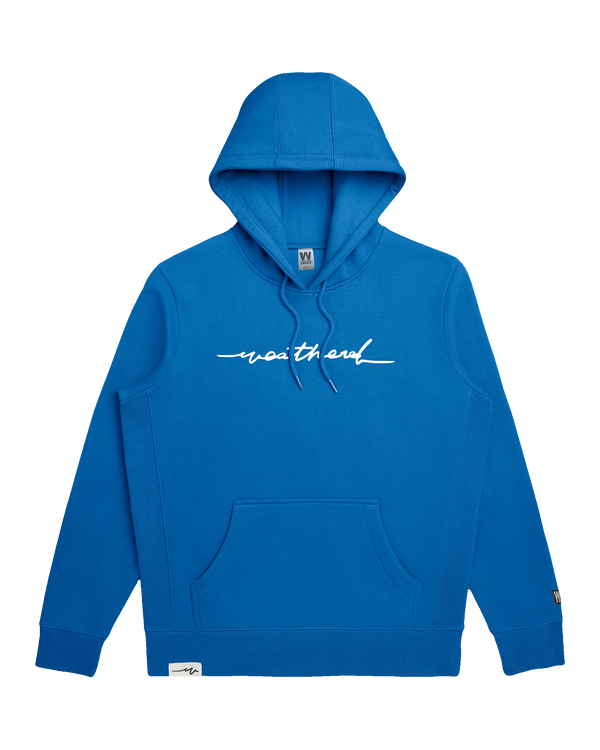
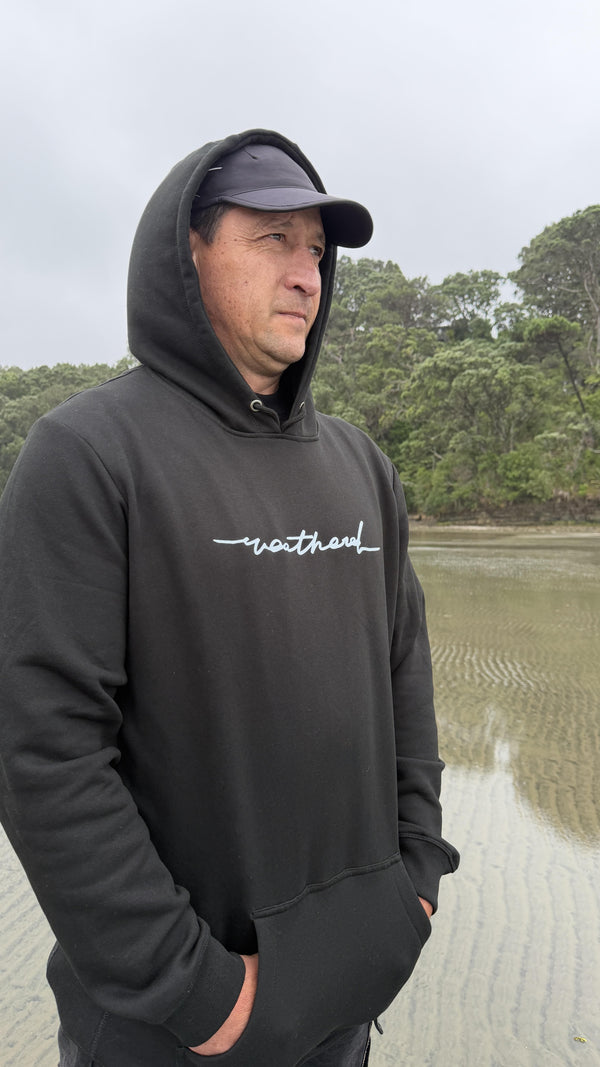
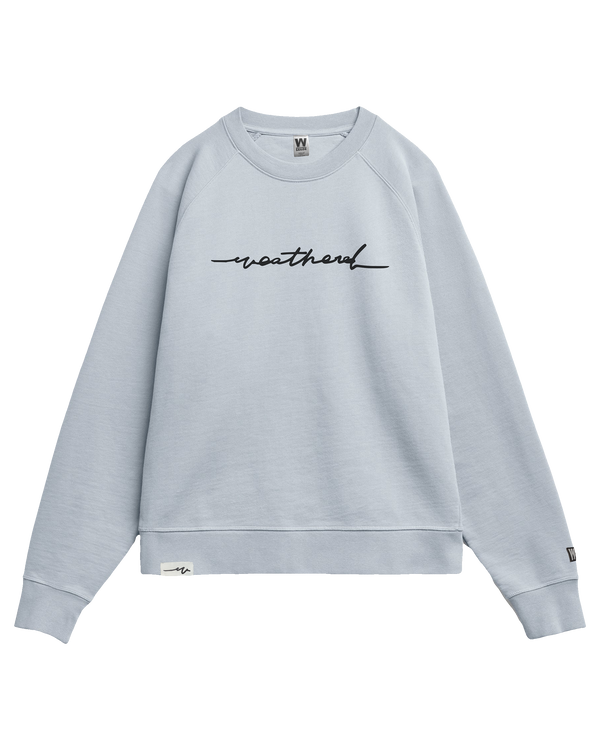
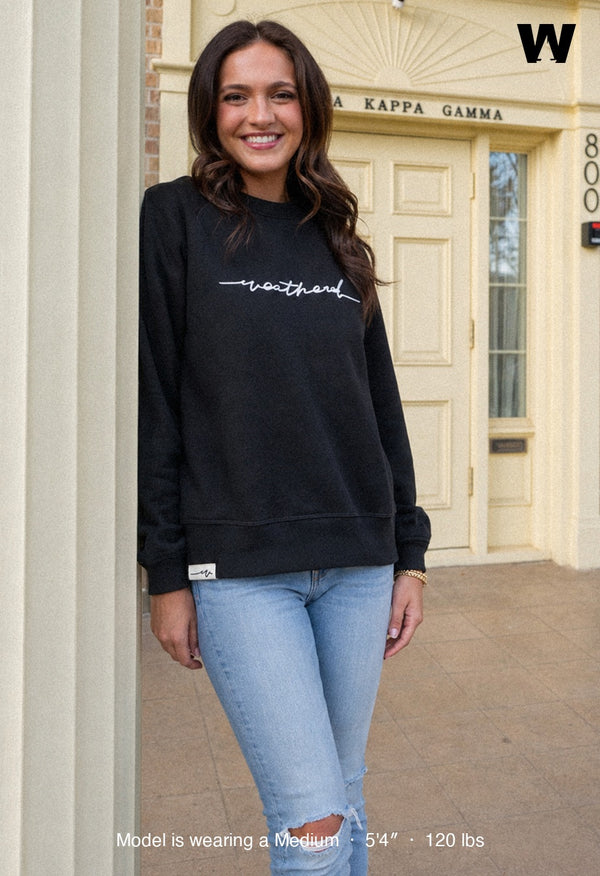
 script — pride in the work
The script mark is about refinement — the kind that comes from work, not polish. It stands for the work you've done on yourself, past and ongoing, and being willing to show the world a little of it. Mostly, though, it's about being proud of yourself: for doing whatever you needed to do to feel your best, and for treating the people around you a little better every chance you get. That work shows up in infinite ways. While you're doing it, be proud of it.
All five together
Put them together and you get something close to a full map. Seeing other people (ahoy). Staying steady (the anchor). Making peace with your own flaws (sketchy). Carrying what's heavy, and knowing when to set it down (the Bear). Being proud of the work (script). Outward care, inner ballast, self-acceptance, honest struggle, earned pride.
None of it is a finish line. The work doesn't fully close, and we're not going to pretend it does. These are just five small reminders you can wear while you stay in it — yours to keep, however you need to.
— Aaron Fulmer, Founder
Learn more about what we give and why, or explore the collections behind each mark.