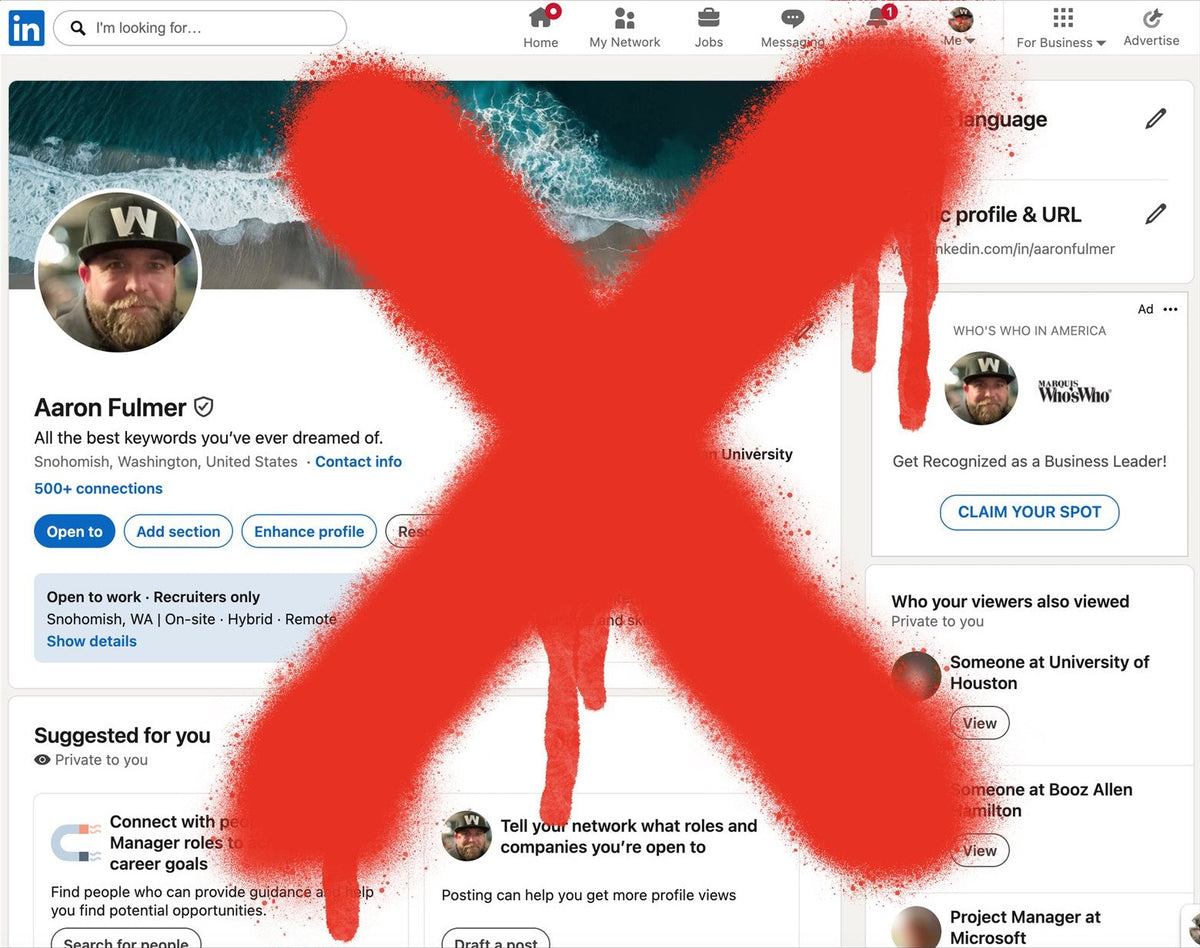
I had the degrees. I had the résumé. I had recommendation letters from executives — the kind of people whose praise is supposed to open doors.
I sent it all out. For years.
The doors stayed shut.
I got laid off from tech at maybe the worst possible moment to get laid off from tech. The whole industry had fallen in love with AI at the same time — every earnings call, every all-hands, every press release. Investment poured one direction and headcount drained the other. I don't think anyone planned it as cruelty. It just meant that the exact thing being celebrated as the future was, very quietly, making it outrageously harder for someone like me to find work in the present.
So there's a number you stop checking after a while. Application sent. Application rejected. Application — no response at all, which is somehow worse, because at least a rejection is a person.
You start to do this math where every credential you spent years earning gets quietly marked down. The degree. The title. The letters. Worth less this month than last. I'm not telling you that to be dramatic. I'm telling you because if you've felt it, I don't want you to think you imagined it.
That's the bear. That's the thing that shows up and sits on your chest. And for a long stretch I just carried it around.
Eventually you hit a fork, and it's a real one, not a motivational-poster one.
One road: transition. Completely. Walk away from everything I'd built a career around and start over somewhere the layoffs hadn't reached yet.
The other road: turn around and walk straight at the thing that had just cost me my job. Learn it. Actually learn it — not "I took a webinar" learn it. And then point it at something of my own.
I picked the second road. Partly out of stubbornness, I'll be honest. If AI was going to rearrange my entire industry whether I liked it or not, I wanted to understand it well enough to build with it instead of just getting moved around by it.
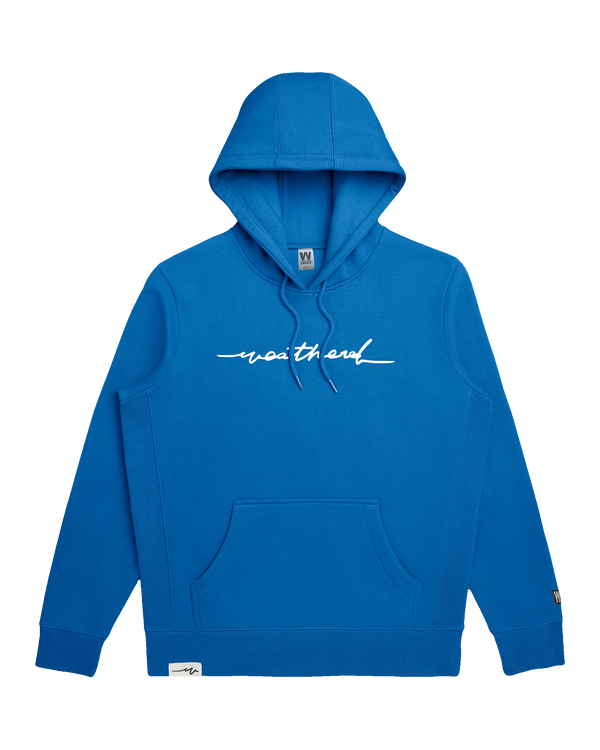
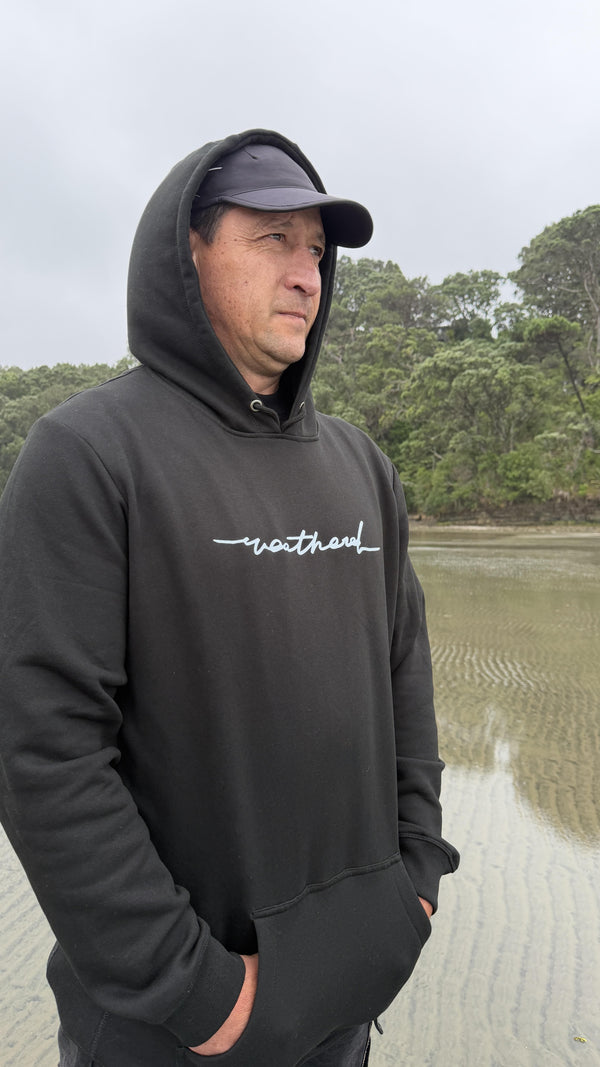
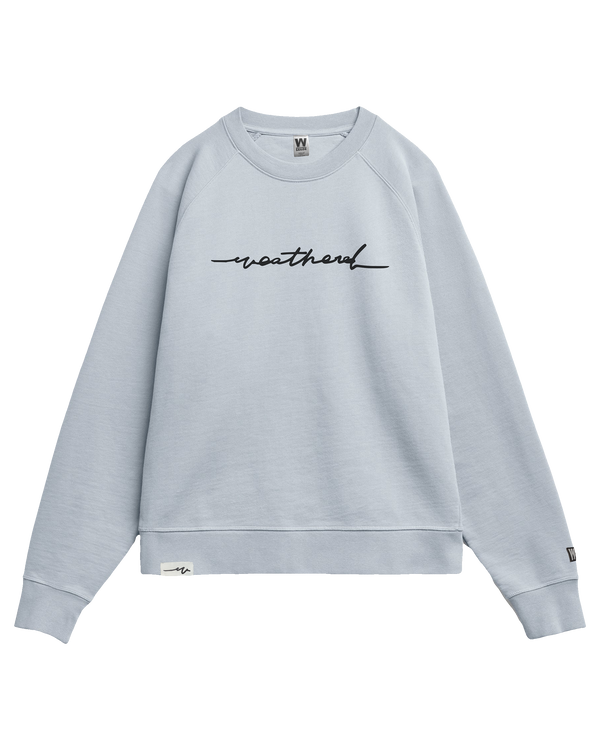
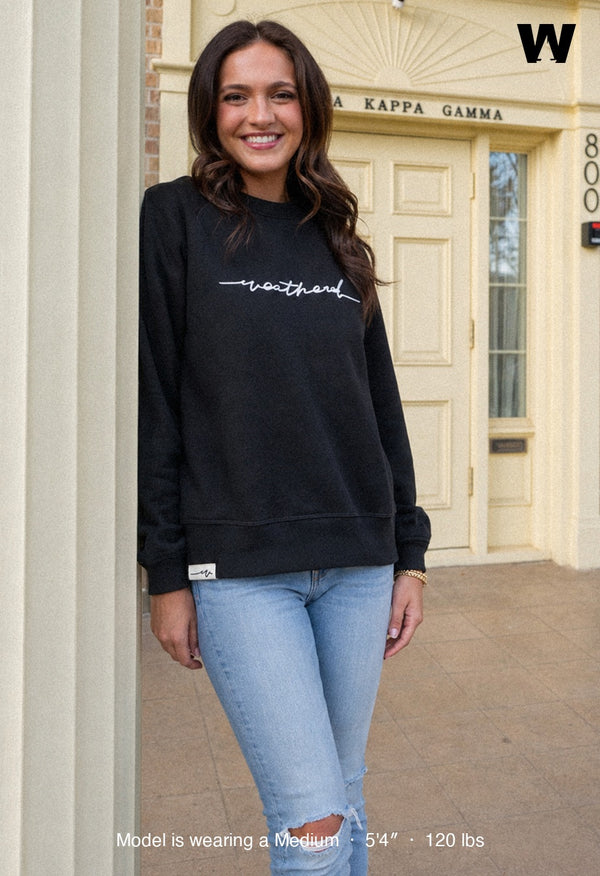
The thing I pointed it at was Weathered Sailor.
Here's the part I should say plainly: I knew nothing about running this kind of business. Not the storefront, not the email, not the analytics, not the photography, not the supply side. Nothing. A brand is a deceptively deep thing — it looks like a logo and some hoodies, and underneath it's a dozen specialized trades stacked on top of each other.
I had one of me.
So the real experiment wasn't "can I sell shirts." It was: can one person, starting from zero, use these new tools to do the work of a team — and not do it badly?
What follows is the honest log of that. The tools I tried, what stuck, and what I threw out and why. I'm naming them on purpose. Somebody two years behind me is going to read this, and I'd rather hand them the map than the highlight reel.
The thing that became my co-worker
The center of all of it is Claude Code. Not a chatbot I ask questions and walk away from — something I actually build alongside, every day. It reads my store, writes to it, keeps notes, argues with me when I'm about to do something dumb.
I'll go further than that. I didn't want one general assistant pretending to know everything. So we built a small crew of specialists — each one with its own job and its own rules. There's an orchestrator that holds the whole brand in its head. There's one that only thinks about product photography. One for email. One for the numbers. One whose entire job is to catch me before I publish a claim we can't stand behind. They live in a version-controlled system, like a real company keeps its records, so nothing important lives only in my head or in a chat window that disappears.
That last one — the claims-checker — has stopped me more than once. Which is exactly what I wanted. I didn't build a yes-machine. I built something that tells me no.
The tools I kept
Shopify runs the store. I didn't switch platforms chasing some perfect setup — I learned the bones of the one I had and got surgical with it instead. Small, careful changes I can undo, not ground-up teardowns. I learned that one the hard way.
Klaviyo runs the email. The entire system — the welcome series, the reminders, the post-purchase notes — got rebuilt to actually sound like us instead of like a template. We reach it through its own interface for the careful stuff, and I'll admit there's a quieter, faster path underneath that does the heavy lifting. Same system also runs our reviews now.
GA4 and Microsoft Clarity are how I see. One tells me the numbers; the other lets me watch, anonymously, where a real person hesitated on the page. You learn more from one recording of somebody almost-but-not-quite checking out than from a week of guessing.
For imagery, I went deep into AI image generation — and this is where I want to be careful, because it's where the temptation to fake things is strongest. We built a real pipeline for product shots. But we drew a hard line we don't cross: the wordmark on our garments doesn't get AI-generated. The real artwork gets composited in. If a photo would imply something about a product that isn't true, we don't ship it. A tool that can invent anything is also a tool that can lie, and I decided early that we weren't going to.
The tools I threw out
Judge.me ran our reviews for a while. We moved off it and consolidated reviews into the same system that runs our email — fewer moving parts, one place to keep honest, one less thing bolted onto the site. Not a knock on the tool. Just one too many tools.
ChatGPT and a few others are still around — but not where you'd think. They don't get a vote. I use them the way you'd use a sharp friend who isn't on the project: to stress-test an idea, to argue the other side, to tell me when I'm fooling myself. The building happens in one place. The second opinions come from everywhere else.
And then there was the contractor.
I'd paid someone to help with the site's writing. At some point — without asking me — they ran our Our Story page through an AI and handed it back "improved." Six chapters of the actual story, the real thing I'd written, flattened into a quarter of the words. Smoother. Emptier. The specific made generic.
I only got it back because the original had survived in an old saved version of the site. We restored it word for word.
I keep that one close, because it's the whole lesson in a single bad afternoon: the tool isn't the danger. Handing it the wheel is. AI didn't shorten my story. Someone made that call without asking me, and used AI to do it faster. The technology will do whatever the hands on it decide. That's been my rule ever since — these things are levers, and a lever still needs someone who gives a damn holding the other end.
Where I actually am now
I run a store I couldn't have run a year ago. Not because I became ten people. Because I learned to direct a set of tools well enough to cover the ground ten people used to cover — and kept my hands on every decision that mattered.
I'm not going to sit here and tell you it's finished, because the whole point of this brand is that nothing is. You don't arrive. You keep going. The bear goes quiet, then it doesn't, then it does again. The work on yourself isn't a thing you complete and frame on the wall — and it turns out the work on a business isn't either.
So this is a checkpoint, not a finish line.
What's next
There's more I want to build. Photography that moves, not just sits. A store that understands what you're actually looking for before you've finished asking. Systems that catch a problem on the site before I do, instead of after. I want this place to feel, more and more, like it was made by someone who's paying close attention — because it is.
I started this because my résumé stopped working and I had to decide whether to run from the thing that broke it or learn to build with it.
I'm not going to pretend that was a clean, triumphant choice. Some of it was just refusing to quit on a Tuesday and then doing that again on Wednesday.
But if you're standing at your own version of that fork right now — credentials that suddenly feel worthless, doors that won't open, a whole industry talking past you — I'll tell you the one thing I actually believe.
The tools that are making it harder are the same tools. You're allowed to pick them up.
— Aaron