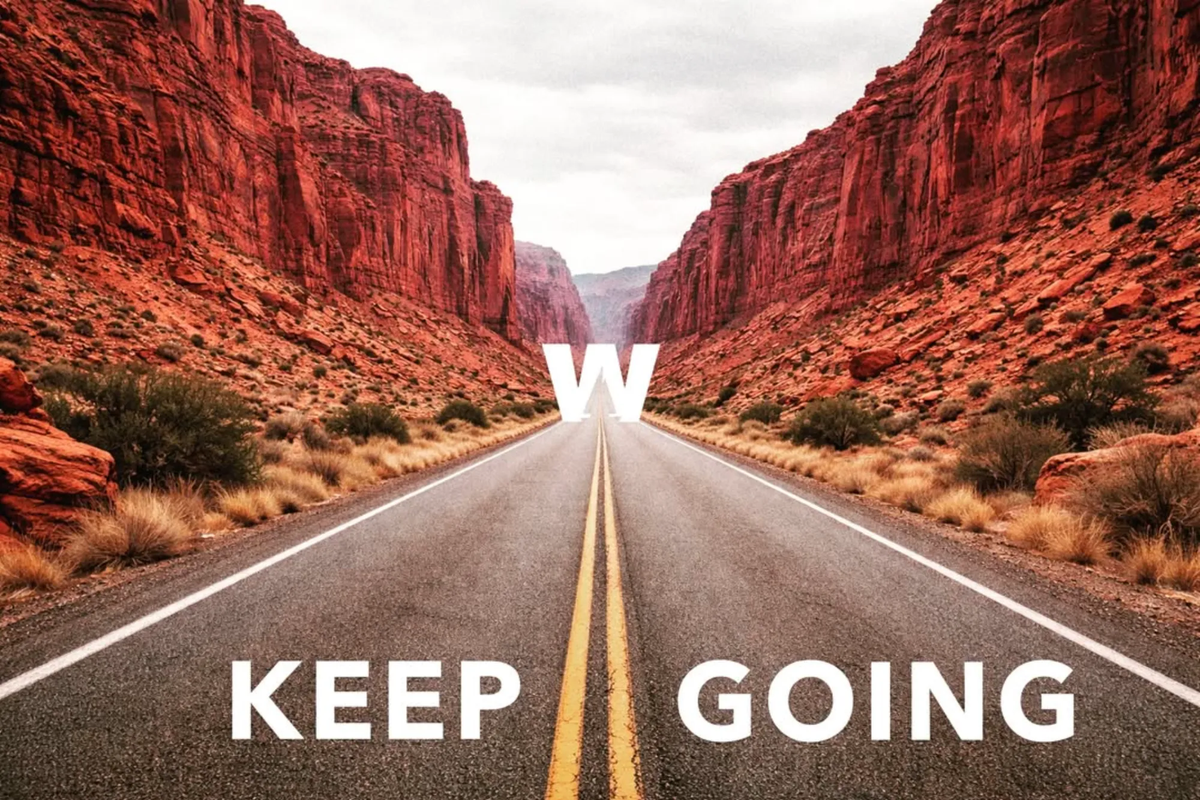
“Keep going.”
I’ve spent a lot of words being suspicious of those two words — how we hand them to people like a life raft when sometimes the honest thing is to let someone stop and rest. I still believe that. Rest is allowed. Retreat isn’t failure. Setting the weight down for a while can be the bravest move there is.
And here is the other half of the truth, the half I have to tell just as plainly, because leaving it out would be its own kind of lie: on most mornings, the whole job is to keep going. Not because a hustle poster told me to. Because building something from nothing is a decision you have to make again every single day, and some days making it is the hardest thing I do.
The part nobody puts on the poster
People imagine starting a company as a single brave leap. It isn’t. It’s a thousand small decisions to not quit, strung end to end, most of them made on days when quitting would be completely reasonable. The leap is easy compared to the Tuesday six months later when nothing has worked yet and no one would blame you for stopping. That Tuesday is the real test. There are a lot of Tuesdays.
I didn’t arrive at this venture fresh and full. I got here after years of the other thing — the let-downs and the rejections I’ve written about before, the doors that closed politely, the “we went another direction” that arrives after you poured a piece of yourself into the room. You can absorb a lot of those. But they leave a residue. They teach a quiet lesson that reaching, wanting, trying out loud is dangerous. Starting something new means overruling that lesson on a daily basis.
The circles that got smaller
There’s a part of this I don’t hear founders say often enough, so I’ll say it. When the ground moved — the layoff, the life changes and financial pressure that came after it — some of my circles got smaller. Professional ones, and some friendships too. It turns out a hard season applies a litmus test you never asked to run, and not everyone comes out the other side of it standing next to you. That was its own grief, layered under the practical one. And it was clarifying in a way I wouldn’t wish on anyone but wouldn’t give back either: you learn exactly who and what steadies you when the water’s rough.
That’s the anchor, if you want the symbol for it. Not the thing that stops you moving — the thing that holds you steady enough to keep moving on purpose. For me it turned out to be a much shorter list of people than I’d assumed, plus the work itself. Which brings me to the hardest part to write.
The one that doesn’t leave
I do all of this while carrying a lifelong fight with treatment-resistant depression and anxiety. “Treatment-resistant” is a clinical way of saying the usual keys don’t reliably open the lock — you try the things, and the thing stays. It’s the Bear I’ve described before: it goes quiet long enough that you start to believe it’s gone, and then one ordinary morning it’s back on your chest with no warning and no reason it owes you.
I want to be careful and honest about this in the same breath. The business is not my treatment. Building Weathered Sailor did not cure anything, and I would never tell you it could — the real work of managing this happens with real help, in rooms I’m not writing to you from. What the work does is give me a reason to get up and a direction to point at on the days the Bear is heavy. That’s not a cure. It’s a rope to pull on. Some days that’s the difference.
Both things are true
So how do I square “you don’t always have to keep going” with “keep going is the whole job”? I don’t. I hold both. Some days you set the weight down and wait for better weather — that’s not weakness, and I’ll defend it to anyone. And across the longer arc, the objective is still to get up and go after it again. A retreat has a direction: back toward the voyage, not away from it. Resting so you can go again tomorrow and quitting on the whole thing are not the same act, even when they look identical from the outside on a bad Tuesday.
The trick — the actual skill — is telling those two apart in real time, honestly, without letting either the hustle voice or the hopeless voice do your reading for you.
Why it’s still the advice I’d give
If you came to me thinking about starting your own thing — especially if you’re carrying some version of this same load — I’m not going to pretend the honest answer is soft. My biggest piece of advice is still the plainest one: keep going. Go after it every single day. Not blindly, not at the cost of your health, not by out-hustling a bear that doesn’t trade in effort. But go. Make the decision to not quit, again, and then again tomorrow. In my experience that daily decision is the entire difference between the people who build the thing and the people who talk about the thing they almost built.
I’m allowed to say that only because I’ll say the cost out loud in the same sentence. It is hard. It costs more than the posts admit. And it is still, for me, worth going after every day.
What clothing can and can’t do
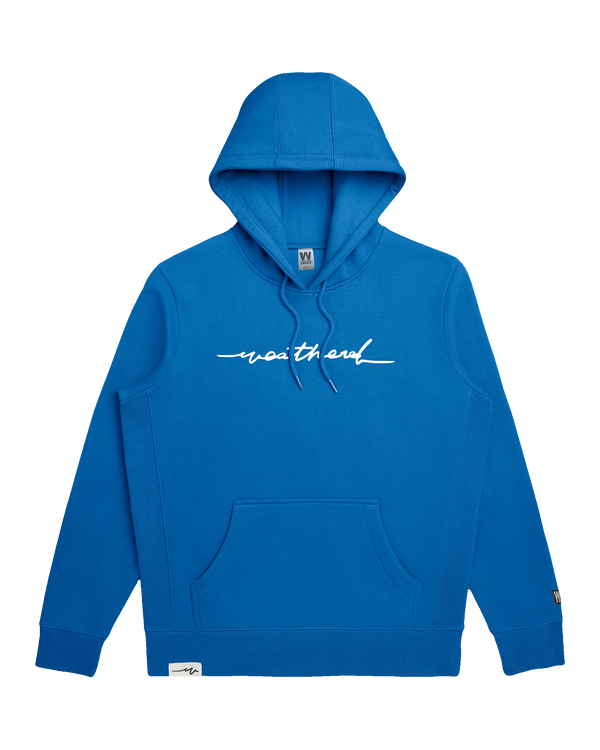
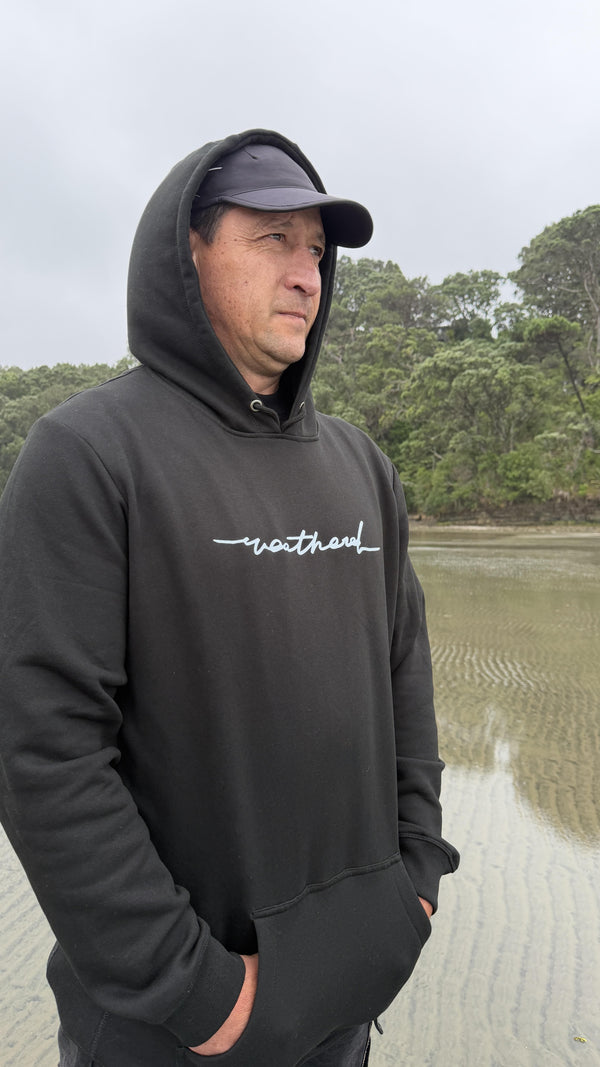
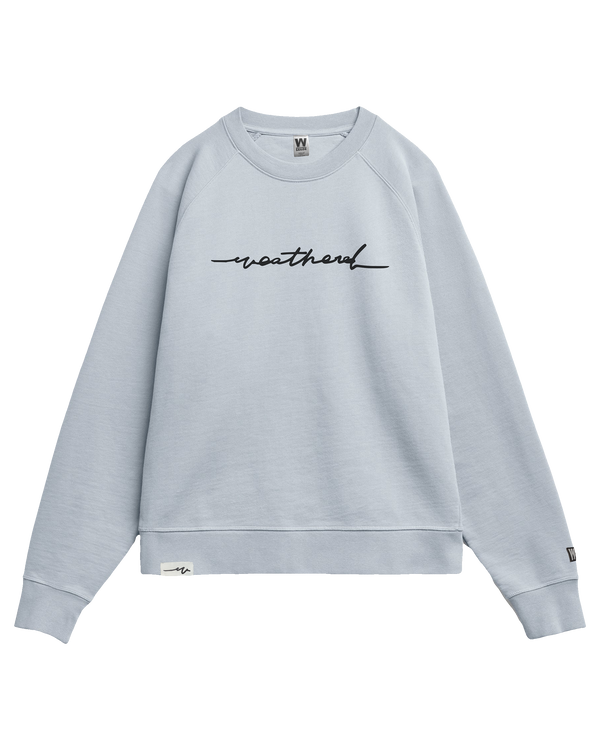
I’ll say the obvious thing plainly, because a brand that talks about mental wellness has a responsibility not to overstate its role: a sweatshirt does not fix anything. We don’t sell cures and we never will. What a piece of clothing can be is a small daily reminder — a mark you catch in the mirror on a heavy morning that says both things at once: that setting it down is allowed, and that you get to go again. A reminder, not a remedy. (It’s also why 1% of every order supports To Write Love On Her Arms, Active Minds, and NAMI. The real work happens in places we’re not qualified to be.)
And that’s the line I want to draw carefully. This isn’t advice about a diagnosis, and it certainly isn’t clinical — it’s one founder’s honest account. If you’re in the deep end right now, please reach for real support; a stranger writing on the internet is no substitute for a person who can actually help, and reaching out is its own act of strength.
But if today is a day you can get up and go after it — even a little, even badly — that counts. That’s the whole job. I’ll be doing the same thing in the morning, Bear and all. So will you.