Two years ago, I got laid off. I didn’t have a plan. I had an itch.
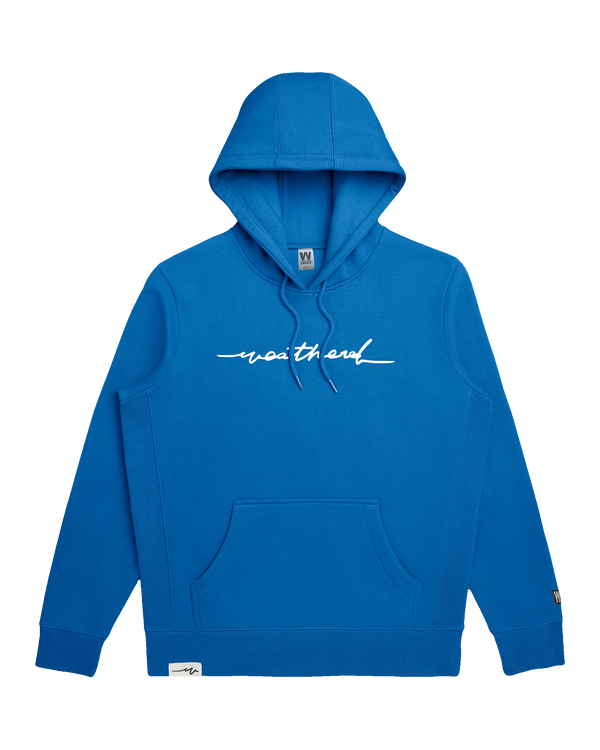
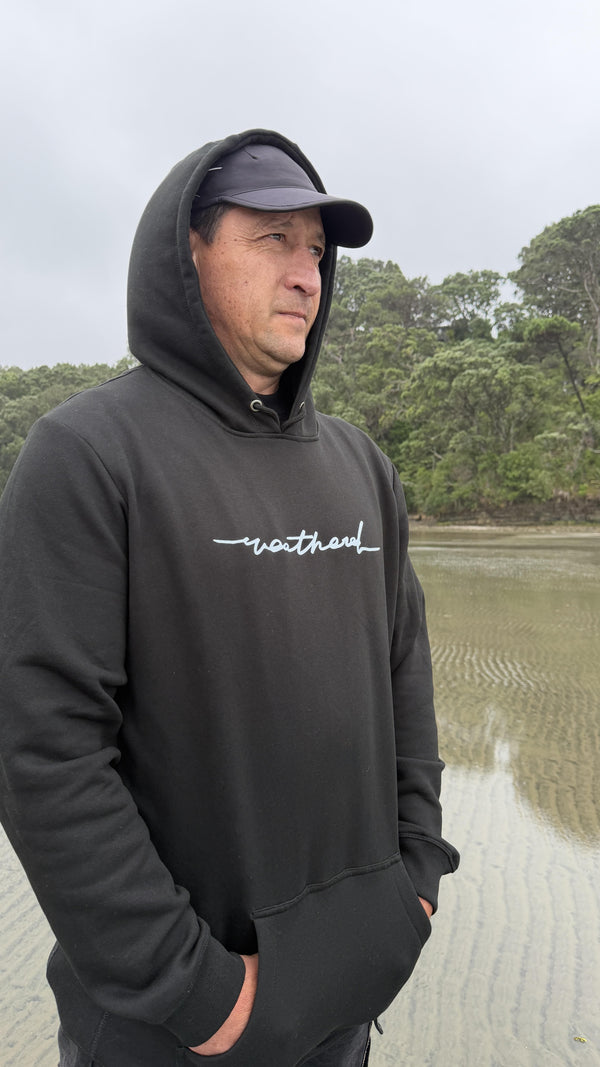
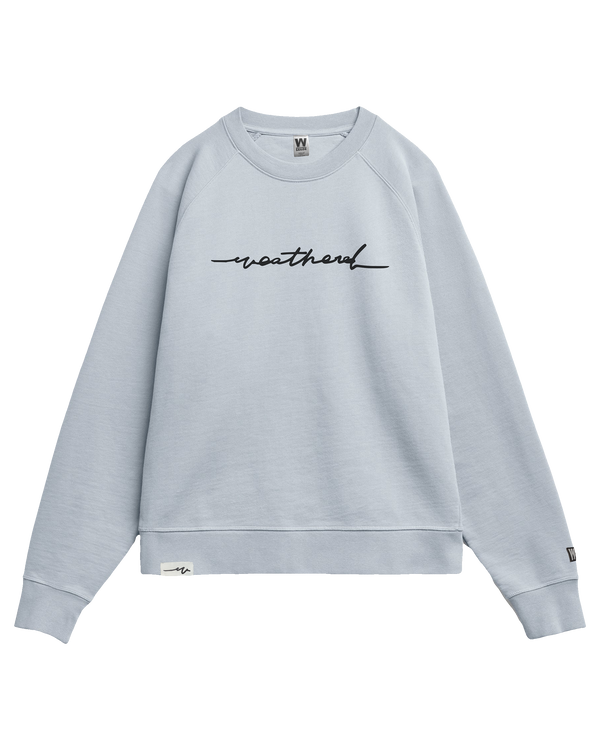
That’s the whole origin story, and I’m done dressing it up. I wanted to make something of my own, so I started a small apparel brand called Weathered Sailor to scratch it. I wasn’t chasing a career pivot. I wasn’t building a personal brand. I wasn’t trying to become an ecommerce operator, an AI systems builder, an SEO consultant, or a someday app developer. I just needed one thing in my life that was mine — one thing I could shape, that wasn’t waiting on permission from a company that had already decided I was no longer part of its spreadsheet.
What nobody tells you at the start is that one honest decision to build compounds into skills you never went looking for.
One problem hands you the next
The path, if you can call it that, went like this. Apparel scratch-itch. Then ecommerce. Then customer experience. Then site performance. Then technical SEO. Then AEO and AIO — the work of making a business understandable not only to search engines, but to AI assistants, answer engines, social platforms, and whatever comes next. Then AI-assisted engineering. Then consulting work for other people. And now, maybe, Shopify apps, internal tools, and a few side businesses that showed up out of nowhere.
None of it was on a roadmap. I want to be precise about that, because the tidy version — “I saw the opportunity and executed” — is mostly nonsense. Each new domain grew directly out of a problem the last one handed me. I didn’t choose the next skill; the work demanded it. I answered the problem in front of me, then the next one, then the one after that — and much later I looked up and realized I’d become something I couldn’t have named at the start.
Let me show you two of those problems, because I’d rather show than claim.
Proof, not promises: the performance paradox
Weathered Sailor carries more motion and video than it ever has. Heroes that play. Marks that draw themselves on. Tiles that move. Visual moments meant to make the site feel alive, not like another flattened template selling you the same sweatshirt in a different font. In theory, all of that should make the site slower — motion is heavy, video is heavy, richer experiences usually cost performance. And yet today the site is the fastest and lightest I’ve measured it — with more of that motion than at any point in its history.
That didn’t happen because I’m naturally good at this. It happened because somebody told me the truth. A follower reached out and said our All Products page was freezing — not just his phone, his computer too, locking up before it finished loading. That kind of message stings, because it’s the exact opposite of the first impression you want. So I went hunting.
The first thing I had to fix was how I measured. It’s tempting to load your own site, watch it snap right up, and declare victory — but that’s a flattering measurement. You’re logged in, your cache is warm, your device is decent, and you’ve already loaded the scripts and images the site throws at a stranger. That’s not what a new visitor gets. So I started measuring the way a stranger actually arrives: cold, cookieless, no cache, timing every resource the page pulls. Measure the real experience, not the comforting one.
What I found was humbling. A single script behind one of our moving galleries was quietly pulling roughly 8.7 MB of data and preloading 600-plus full-size images before a customer could do a single thing. The homepage was rendering nearly 180 product cards when only a handful were ever shown. And underneath all of it sat about 3.6 MB of third-party JavaScript — code from bolted-on apps — including one chat widget weighing around 850 KB that I didn’t need. The server itself was never the problem; it answered in under 50 milliseconds. The weight was everything I had added on top.
That’s a lesson in ecommerce and probably in life: sometimes the thing slowing you down isn’t the foundation. It’s the pile of “helpful” additions you kept accepting because each one seemed reasonable by itself.
So we went to work. We stopped the wasteful gallery from firing until a visitor actually scrolls near it. We stopped the homepage from building cards it never displays. We removed the chat widget entirely. We took the outside scripts and styles — the ones loading from other companies’ servers and blocking the page from painting — and either hosted them ourselves or told them to wait their turn. And we made the video considerate: on a slow connection, a data-saver setting, or for anyone whose device says they prefer reduced motion, the heavy video simply doesn’t download — they get a clean still image instead.
The current state, measured the same cold, honest way: homepage page weight nearly halved, image requests down roughly 70%, about 850 KB of JavaScript per page removed by cutting one tool I didn’t need, and the slowest data fetch cut from around ten seconds to about four. The page that used to freeze a person’s phone and computer no longer does. More motion. Less weight. Faster site. Measured, not guessed.
And every fix is reversible — I keep a saved copy of every state before I make a meaningful change, because moving fast and being careful are not opposites. That part matters to me. It’s the operations person still alive inside the founder. Speed isn’t an excuse to be sloppy; good systems let you move faster because you know where the exits are.
SEO, AEO, and the work of being understood
Performance was only one layer. The bigger realization was that an ecommerce site isn’t just a storefront — it’s a communication system. A customer needs to understand it. A search engine needs to understand it. An AI assistant needs to understand it. A social platform, a crawler, a preview card, a product feed, and a human on a phone at 11:47 p.m. all need to receive some version of the same truth.
At first I thought of SEO the way a lot of people do: metadata, keywords, page titles, Google hygiene. Now I think of it as operational truth. Does the site describe what the business actually is? Do the product pages help a person choose? Does the metadata match the page, and the structured data support the claims? Does the brand language stay consistent across homepage, collections, product pages, FAQs, schema, and search surfaces? Can an AI assistant summarize the business accurately without inventing half of it?
Those aren’t abstract questions — we found real problems. When I finally crawled my own catalog the way a search engine sees it, 204 of our 286 products were carrying off-brand metadata. 193 of them shared one generic title template — a “Wellness [type]” stamp applied so bluntly it had truncated real product names into near-duplicates of each other. It was technically present and strategically useless: it didn’t help the product, the customer, search, or an AI trying to tell a heavyweight crew from a hoodie from a symbolic collection. So we rebuilt them — every eligible title rewritten to lead with the real product and the real brand, holding one small cohort back on purpose so the change wouldn’t collide with other work already in flight.
Then there was the contradiction at the front door. The homepage’s own social and search metadata was telling Google and every social platform we were “streetwear,” while the rest of the site — and the entire point of the brand — said mental wellness apparel. Humans saw one business; the machines were handed another. We fixed the signal so every audience lands on the same, true answer.
And because discovery increasingly runs through AI assistants and answer engines, I built for that too: machine-readable descriptions of the business and its products, structured data on the product pages, and answer-ready content, so a model summarizing Weathered Sailor gets it right instead of guessing. Where the honest move was restraint, I took it — I deliberately keep certain rating markup off the site, because emitting signals you haven’t genuinely earned is exactly the shortcut that gets you penalized, and it’s dishonest besides.
None of this is about a customer sitting there auditing your brand taxonomy. It’s that confusion compounds. They may never know your open-graph title is off or your schema is thin — but they feel the friction, and the difference between a brand that’s clear and a brand that’s almost clear. Increasingly, AI systems feel it too, and if your site doesn’t explain itself, something else will explain it for you — often badly. Done well, none of this is really “traffic” work at all. It’s clarity infrastructure: making the business easier to understand, trust, navigate, summarize, and recommend.
The loop that feeds itself
Here’s the part I didn’t see coming. The exact skills I built out of necessity — diagnosing, measuring, restructuring, simplifying, making pages findable and understandable — turned into consulting work for other people. Folks started asking me to do on their properties what I’d been doing on mine.
And that’s not just extra income, though I won’t pretend the income doesn’t matter — it matters a lot when you’re keeping a small brand alive in the real world. The more valuable part is that the learning compounds in both directions. Every client property teaches me something I bring straight back to Weathered Sailor, and every Weathered Sailor experiment sharpens what I bring to the next client. Every audit improves the next workflow; every workflow improves the next build; every build improves my eye. Learning stopped being a cost and became part of the product. The thing I was forced to learn for myself turned into a skillset other people are willing to pay for.
The forty subscriptions I no longer pay for
The second problem was quieter, and it crept up on me: I was drowning in tools. When I started, I did what most operators do — I installed them. Some were useful. Some were too expensive, even when I liked what they did. Some were too heavy, costing the site real performance without giving back equal value. Some were too rigid for the look or function I wanted. Some made AI integration harder. Some just weren’t very good.
But the deeper issue was the sum of them. That much bolted-on software becomes its own kind of weight — each app with its own interface, scripts, assumptions, billing, limits, and idea of how your business should behave. One app is a tool. Forty apps can become a committee. At some point I realized I wasn’t just building a brand anymore; I was trying to get a room full of subscriptions to stop arguing with each other.
So my co-builder and I started engineering our own solutions instead. I’ll say plainly who the co-builder is, because pretending I pulled this off solo would be its own kind of lie: the work gets done with Claude Code, ChatGPT, and an AI operating layer I’ve gone as far as naming Reggie. Yes, I named the COO agent. No, I’m not embarrassed by it. The point isn’t that AI magically built me a business — it didn’t. The point is that AI collapsed the distance between “I wish the system worked this way” and “let’s build a version that does.” That’s a very different thing.
We replaced tools only when we could reach parity with the part I actually needed — not every app, not every subscription. Some are worth keeping, and the ones I keep, I try to use well. But when a subscription cost too much, weighed too much, restricted too much, or gave back too little, we asked the better question: can we build the specific version Weathered Sailor actually needs? When the answer was yes, we built it, tested it, kept the rollback path, and cancelled. Across the life of the brand we’ve now moved off 40 subscription apps for one reason or another.
That saved money, but the money is the smaller half of the story. The bigger shift is capability. Every replacement taught me something. Every internal tool made the next one easier. The business started to feel less like a rented stack and more like a system with a point of view — and it made the few subscriptions I kept more valuable, because each one now has a clearer job.
Eventually the obvious question showed up: if I’m solving these problems for myself, how many other Shopify operators and small-business owners are fighting the same ones — overpaying for bloated tools because they don’t have a lighter option, accepting rigid workflows because they don’t know they can build closer to the way they think? I don’t know yet. But the question is real now. Maybe some of these systems become Shopify apps. Maybe some become consulting packages. Maybe some stay private because they’re too specific to how I run Weathered Sailor. A problem I solved out of necessity might turn out to be a problem worth solving for other people too.
What the Weathered Sailor OS actually is
I’ve started calling the broader system the Weathered Sailor OS — which sounds bigger than it is and smaller than it feels. It isn’t an operating system in the literal software sense. It’s an AI-assisted, code-driven, human-governed way of running the brand: product data, technical SEO, AEO/AIO workflows, analytics, creative direction, image standards, theme logic, content systems, QA, decision logs, customer-experience rules, mission language, automation, and rollback paths — all connected by one simple idea. The business should increasingly behave the way I mean it to, not like the average of whatever forty third-party apps allow.
At its best, it’s a technological representation of my creativity. That’s the clearest way I can say it, and it’s the part I don’t want to lose sight of: the technology is not the point. The technology is how the point gets expressed. Lately the pace still surprises me — because the distance between an idea and a working version of it has collapsed. That’s exciting, and a little terrifying, because once a system can move that fast, taste and judgment and governance matter more, not less. AI can help me build faster. It cannot decide what is worth building. That part still has to be mine.
The part tech can’t fix
I don’t write these without the honest half, because leaving it out would turn the whole thing into a commercial. Tech and AI have changed what one person can build — that’s not hype, I’ve lived the before and after. But I still carry real challenges that threaten whether Weathered Sailor survives and grows. AI hasn’t solved cash flow. It hasn’t guaranteed sales. It hasn’t erased debt pressure, uncertainty, household strain, or the ordinary human weight of doing a hard thing for a long time without knowing whether it will work. AI can’t make people care. It can’t create trust out of thin air. It can’t replace taste, timing, capital, endurance, or help from real human beings. It makes me faster at the parts that can be engineered, and more honest about the parts that can’t.
That’s the truth sitting underneath the momentum — and it’s exactly why Weathered Sailor is about mental wellness at sea instead of some tidy founder success story. The water stays rough even on the days you’re making progress. It’s also why the giving language matters to me and why I try not to treat it casually: 1% of every order supports To Write Love On Her Arms, Active Minds, and NAMI. The real help lives in places I’m not qualified to be.
If you’re staring at an itch
I didn’t choose this path on purpose. I fell into it one problem at a time, and I’d built something real inside it before I even noticed it was happening. Laid off to laying it on — in a domain I didn’t know existed two years ago.
I thought I was starting over. I was actually stacking. Operations. Research. Systems. Brand. Customer experience. Writing. Technology. Taste. Judgment. Resilience. All of it came with me — and that’s the part a layoff can’t take. A company can cut the role. It cannot erase what you learned doing it.
So if you got that email this year, or last year, or the year before that, and you’re standing in front of an itch you’re afraid to scratch: scratch it. Start the small thing. Answer the first problem, then the next one. You genuinely have no idea what it’s attached to — what skills, what people, what leverage, what version of yourself is waiting on the other side of beginning. I’ll be out here doing the same in the morning.