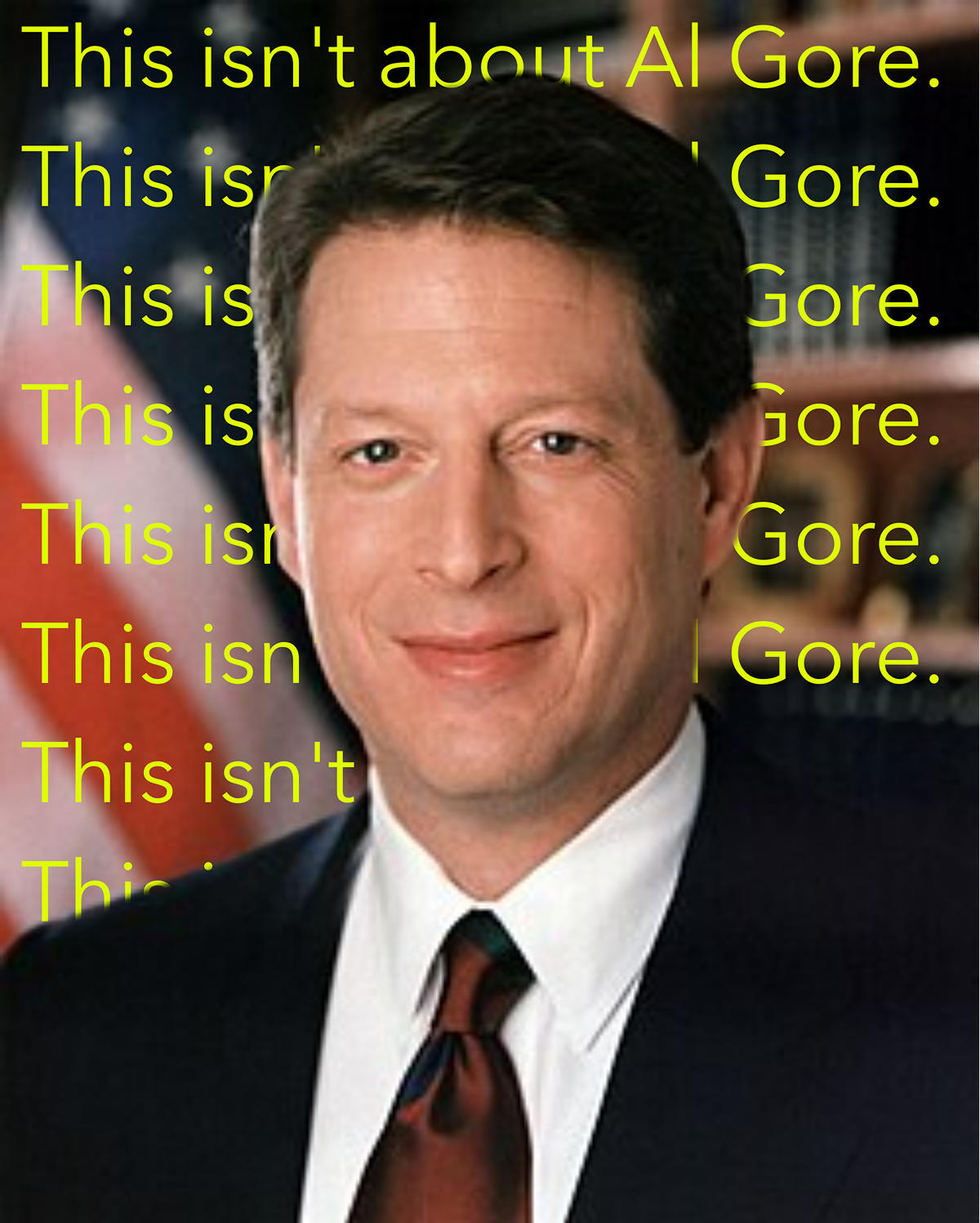
I don't think social media is broken. I think it's doing exactly what it was built to do, extremely well. The problem is that a lot of us are trying to build something completely different on top of it. Attention on these platforms flows toward certainty, conflict, and outrage — toward the hot take and the dunk and the thing that makes your stomach tighten a little before you even finish reading it. I went digging into the why, and the research is pretty blunt about it: one study found that adding a single moral or emotional word to a post increased its spread by around 20%, and a study out of MIT found false news was about 70% more likely to be shared than the truth. The feed rewards the content that leaves you feeling a little worse than before you opened the app. I've started calling them al-GORE-ithms. Say it out loud. It's a dumb little pun and I'm keeping it. And it leaves me with a genuinely uncomfortable question: what happens when you're trying to build a company that hopes people leave feeling better?
My honest first reaction to all of this is anger. Some days I'm genuinely furious that this is the game at all — that a thing I made with care has to fight a cat video and a culture war for the same three seconds. But anger isn't a strategy, and it isn't really what this is about.
That's the whole tension, so let me stop talking about the algorithm now. It's the antagonist in this story, not the subject. The subject is me, and probably you, trying to make something honest inside a machine tuned for the opposite.
I keep forgetting which version of me belongs where
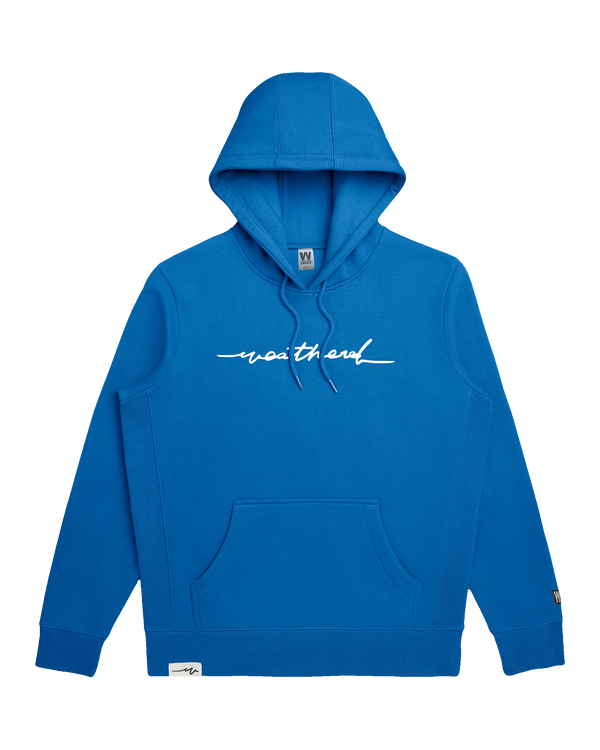
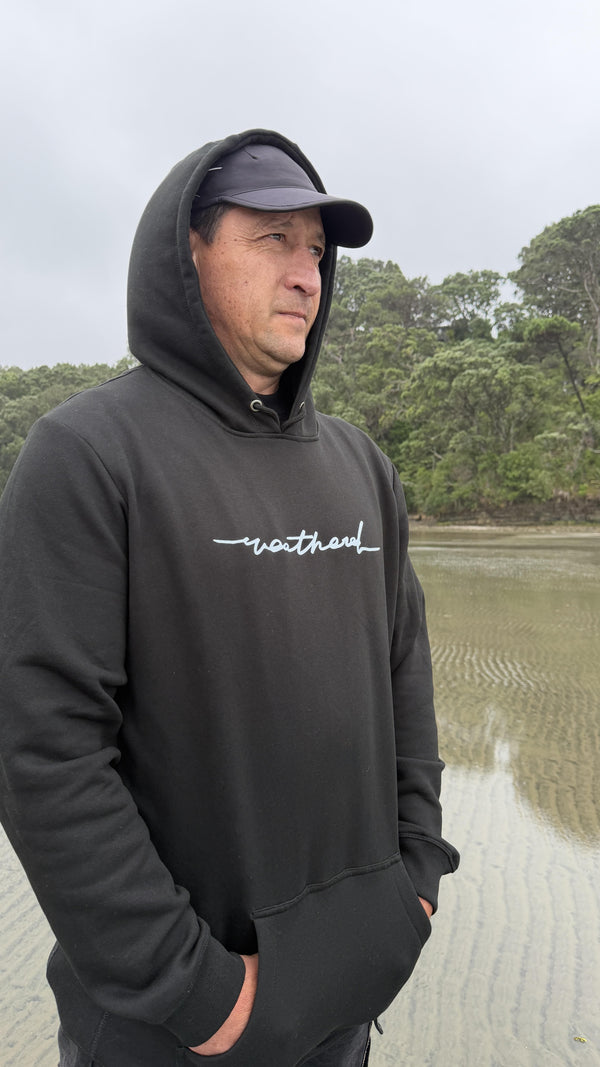
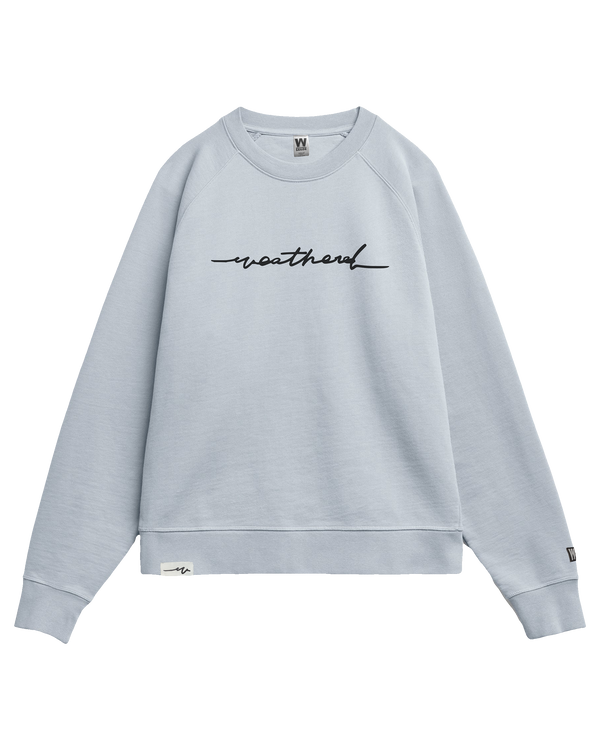
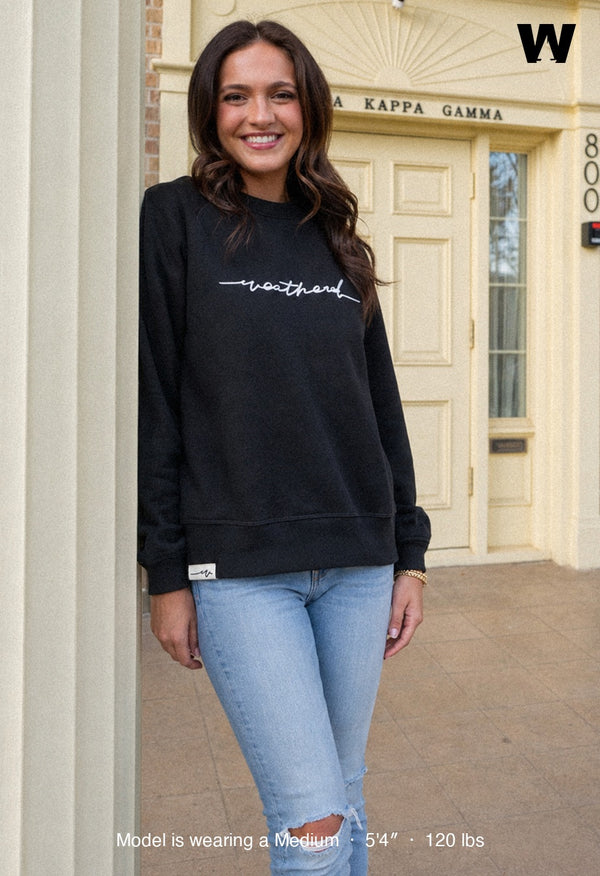
Here's the part I have to keep reminding myself. I'm not trying to become a creator. I'm trying to build a business. Those aren't the same job — but they increasingly demand the same skills, and that's exactly where the tension starts. The apparel, the give-back, the site, the actual garments people put on their bodies — that's the work. The posting is supposed to be how people find the work.
Except every platform seems to ask me to become a slightly different version of myself. Instagram wants me in front of the camera doing Reels. LinkedIn wants a thoughtful guy working an idea out in public. TikTok wants me faster and funnier than I actually am. YouTube wants me documenting everything. None of those people are lies, exactly, but they aren't the same person either, and keeping them all fed is its own full-time job. At some point I realized I wasn't trying to understand social media anymore — I was trying to remember which version of me belonged where.
I feel like I'm playing the wrong sport. Not badly — wrong.
I'm not competing with other founders. I'm competing with everyone.
When I publish a sweatshirt launch, I used to imagine it landing in front of people who care about small brands, or mental health, or good fabric. That's not what happens. It lands in the same scrolling feed as a political argument, breaking news, a viral dance, a cat video, war footage, and somebody's engagement announcement — all stacked on top of each other, all fighting for the same three seconds. An economist named Herbert Simon saw this coming back in 1971, before any of us had a phone: a wealth of information, he wrote, creates a poverty of attention. That poverty is the actual arena. I'm not competing with other founders for attention. I'm competing with everything anyone has ever felt strongly about.
The stuff I love barely moves. The stuff I resist reaches thousands.
Then there's the part that genuinely messes with my head. A while back I spent most of a morning waiting on the light for a sweatshirt shot. I wanted it a specific way, and when it finally came together it was the kind of photo I'm proud of. I posted it. Almost nothing — a few likes from people who'd have liked anything I put up. Later that same week I propped my phone against a coffee mug on the kitchen counter, talked at it for about a minute with no plan, a little awkward, the kind of thing I usually talk myself out of. That one reached thousands. I wish I could tell you that didn't bother me.
That inversion would be annoying on its own. What makes it dangerous is why it keeps working on you. Psychologists call it variable-ratio reinforcement — a reward that shows up after an unpredictable number of tries. It turns out to be the most persistent, hardest-to-quit behavior of any reward schedule. The everyday version is a slot machine. You pull, mostly nothing, pull again, mostly nothing, and then — occasionally, unpredictably — a win. That's the exact rhythm of posting. Most posts do nothing, then one randomly pops, and that single unpredictable hit is enough to keep you pulling the lever long after it stopped being good for you. It's not a character flaw. It's a very old piece of wiring getting played very well.
The thing I've started calling Founder Drift
So every post carries a tax I didn't budget for. There's a quiet negotiation before I hit publish — do I say the thing I actually think, or the thing the feed seems to want? Usually it's small. One trend you reluctantly copy. One hook you don't quite believe. One opinion pushed a little stronger than the one you actually hold, because the softer version doesn't travel. And it worked, so you do it again. None of those is a big deal on its own. That's the whole trap — none of them is ever a big deal.
But run it forward six months and something has moved. Your posts sound more like the platform than like the company. That's the thing I've started calling Founder Drift: you slowly, without ever deciding to, stop making the thing you meant to build and start making the thing the feed rewards. Nobody chooses it. You just optimize, one reasonable little compromise at a time.
And because every platform rewards a different version of you, Founder Drift isn't even one drift. It's several at once. You don't wake up one morning as the single person the feed built — you wake up as a handful of optimized selves, each tuned to a different room, none of them quite the person who started the company. That's the part that actually scares me. Not going broke. Going generic — a few kinds of generic at the same time — without ever noticing it happen.
Every time I think I've caught up, someone shakes the globe
And all of this is happening on ground that will not hold still. Some weeks it feels like every platform changes the rules at once. Instagram decides everything is Reels now. Threads is suddenly where the conversation is, or it isn't. LinkedIn rewards one kind of post in the spring and quietly buries it by fall. AI search starts answering the questions people used to type into Google. YouTube is either dead or the only thing that will matter in three years, depending on who you ask that day. Pinterest, Reddit, Discord, Substack, Bluesky, whatever launches next Tuesday — all of it moving, all of it at once.
It's like living inside a snow globe. You finally spot a piece you think you understand and you reach for it — half the time before you even really understand it — and just as your fingers close around it, somebody picks the whole thing up and shakes it again. So close. Everything you needed was right there, and now it's a blur again, and you're grabbing. I don't have a graceful way to describe what months of that does to you. It's just exhausting in a way I didn't expect.
Everyone gives you opposite advice, and none of them are lying
When you go looking for help with this, you get buried. Post daily — no, post less and make it count. Chase trends — no, ignore trends and be timeless. Hook them in the first second — but also be authentic and don't perform. The advice is mutually exclusive and it's all delivered with total confidence. For a while that made me think most of it was fake.
It's not fake. Here's what finally clicked: no one is lying — they're each describing what worked for them. Their audience, their moment, their luck, their product. And there's a bias baked so deep into it that we barely see it. The classic illustration is the WWII bombers: the military wanted to armor the sections of returning planes that came back riddled with bullet holes, until a statistician pointed out they had it backwards. Armor the untouched spots, he said, because the planes hit there were the ones that never made it home. Social-media advice has the same hole. You hear from the people whose posts came back covered in likes. You never hear from the millions who did the exact same thing and quietly lost. The whole genre is built on a sample that only includes winners, and it's sold to you as a formula.
My own business is the only source of truth I trust now
That set me free a little. I stopped asking "what works on Instagram" and started asking "what works for Weathered Sailor." Those are different questions, and only one of them has an answer I can use. The internet is great at giving me hypotheses and terrible at giving me answers, because it doesn't know my customers, my product, or the specific corner of the world we're trying to reach. Only my own audience knows that, and the only way to hear from them is to test, watch, and keep the receipts. It matters more now that the reach itself is so thin — one estimate I came across puts the average brand post in front of only about 3.5% of its own followers on Instagram. If barely anyone sees it anyway, the least I can do is learn something real from the ones who did.
The question isn't which platform to use. It's which one I'm wrong about.
Here's what makes all of this heavier than it should be. The real question was never "which platform should I use?" Every one of them is worth something; I could make a case for any of them. The question that actually keeps me up is "which one am I wrong about?" Because if I'm wrong — if I bet the year on the thing that fades and skipped the thing that mattered — I don't just lose some followers. I lose six months. Maybe a year. Time I can't get back and can't spend twice. That's why the choice never feels light. Every one is really a wager against all the roads I didn't take.
An honest platform-by-platform accounting
So here's my real read right now, per platform. Not advice, and not settled — just where I am and why, knowing I might be wrong about half of it.
LinkedIn turned into the surprise. It's the one place the honest, first-person founder register actually flies — no product in sight, just a person working something out in public. It's where writing like this belongs.
Instagram is where the emotional connection lives, through imagery and story. It's the closest thing to the brand's face, and where the made-to-order side of us makes the most sense.
Facebook still quietly reaches genuine supporters — real people who actually care — so I keep showing up. It's just not where the creative energy goes.
TikTok I keep experimenting with, and I haven't found an authentic version of us yet. I'd rather keep testing than fake a voice that isn't ours.
Pinterest is underdeveloped on my end and probably shouldn't be — for premium apparel it has an unusually long discovery-to-purchase window, and it's one of the few places people actually arrive looking to buy something. That gap is on me.
Threads has had promising moments, but not enough evidence yet for me to commit real time.
YouTube is the big long-term one I keep circling — founder documentation, honest conversations about resilience, the slow-build library that compounds. The only thing stopping me is time I don't currently have, and I'm not going to pretend otherwise.
Then there are the ones I haven't touched at all — Reddit, Substack, Discord, Bluesky, and the AI-native discovery surfaces where people are starting to ask a machine what to buy instead of scrolling for it. Some are genuinely interesting. But the honest frame for all of it is the opposite of FOMO. The hard part isn't deciding whether these platforms are good; most of them are. The hard part is deciding whether they're good enough to justify taking time away from designing products, serving customers, and improving the site. Attention is the most expensive currency I have — mine and yours both, when you run a small thing mostly alone — and every platform I add is a platform's worth of it spent. So the empty spaces on my chart aren't neglect. Most of them are a choice I made on purpose about where a finite day goes.
Why I keep doing it when I can't see it working
The last thing I've had to make peace with is that most of the return on this is invisible while you're making it. From what I dug up, content marketing often takes something like six months before it shows you anything real, and most people quit right around month two — just before the first signal would have shown up. And in one survey, more than half of creators said they'd burned out, and a good share had thought about quitting entirely. I believe all of it, because I've felt all of it. You publish into what feels like a void, get nothing back, and have to decide whether to do it again tomorrow on faith. And the cruelest part is that you never get to see the opportunities you didn't create — the customer who never found you because you skipped the post, the door that never opened because you weren't in the room. You can't grieve what you can't see. So I keep showing up on the theory that some of it is landing where I can't watch.
Where I actually am with this
I could tell you I've figured out the answer. I haven't. Tomorrow I'll open one platform, then another, and post something into each. An hour will disappear. Halfway through I'll wonder whether I should have spent that hour on the product instead, or the site, or an actual customer. I'll wonder if I'm making too much of all this, or nowhere near enough — whether I'm spreading myself too thin, or ignoring the one thing that turns out to matter most next year. I still don't know the answers to any of that.
If there's a thread I keep tugging on, it's smaller than a strategy and I haven't managed to tie it off: protect my own voice. Founder Drift — quietly becoming whatever the feeds reward until I don't sound like myself anymore — is the failure that actually scares me, and it might be the only part of this that's even partly in my hands. So I keep catching myself, trying to say fewer things I don't believe and to learn from my own data instead of somebody else's highlight reel. Not because I've settled it. Because it's the thing I keep circling back to while everything else keeps moving.
None of that is settled, and I don't expect it to be for a while — this is just one part of something I'm still working through, and I already know I'll keep pulling on the thread. I just know Weathered Sailor won't exist if I spend all my time trying to master every platform instead of continuing to build something worth discovering on any of them. There's an irony in modern entrepreneurship: you can spend so much time trying to get people to discover your business that you stop building the business worth discovering.
If you're building something quiet inside a machine that rewards loud, I'd genuinely like to know how you're holding your own line. Not because I've figured this out. Because I haven't. This is just where I am in the story.
Sources (all directly retrieved and verified)
Every statistic below is a third-party finding, cited as such — none is a Weathered Sailor claim.
- Brady, Wills, Jost, Tucker & Van Bavel (2017), PNAS — "Emotion shapes the diffusion of moralized content in social networks." Each additional moral-emotional word increased diffusion (retweets) by ~20%. https://csmapnyu.org/research/academic-research/emotion-shapes-the-diffusion-of-moralized-content-in-social-networks (primary DOI: https://www.pnas.org/doi/10.1073/pnas.1618923114)
- Vosoughi, Roy & Aral (2018), Science (MIT) — "The spread of true and false news online." False news ~70% more likely to be retweeted than true news; truth spread far slower. https://news.mit.edu/2018/study-twitter-false-news-travels-faster-true-stories-0308
- Robertson, Pröllochs et al. (2023), Nature Human Behaviour — "Negativity drives online news consumption." Each additional negative word in a headline raised click-through rate (~2.3% for an average headline), across ~105,000 headline variations and millions of clicks. https://pmc.ncbi.nlm.nih.gov/articles/PMC10202797/
- Brady, McLoughlin, Doan & Crockett (2021), Science Advances — "How social learning amplifies moral outrage expression in online social networks." Positive social feedback (likes/shares) on outrage predicts more future outrage — the platform teaches the behavior. https://isps.yale.edu/research/publications/isps21-25
- Herbert A. Simon (1971) — "a wealth of information creates a poverty of attention." Reproduced/attributed via UC Berkeley. https://people.ischool.berkeley.edu/~hal/pages/sciam.html
- SimplyPsychology — Skinner's schedules of reinforcement — variable-ratio schedules produce the highest, most persistent responding and are most resistant to extinction; slot machines are the canonical example. https://www.simplypsychology.org/schedules-of-reinforcement.html
- Survivorship bias (overview; Abraham Wald WWII bomber example) — armor the sections the returning planes were not hit in, because the ones hit there never came back. https://en.wikipedia.org/wiki/Survivorship_bias
- Pew Research Center (2025), "Americans' Social Media Use 2025" — YouTube 84% of U.S. adults, Facebook 71%, Instagram 50%, TikTok 37%, Reddit 26%; Threads/Bluesky ~one-in-ten or fewer. https://www.pewresearch.org/internet/2025/11/20/americans-social-media-use-2025/
- Sprout Social — Pinterest statistics (2026, citing Pinterest data) — 85% of weekly Pinners have purchased based on a pin; discovery of new products/brands is the top reason people use the platform. https://sproutsocial.com/insights/pinterest-statistics/
- social.plus — industry estimate: average Instagram brand post reaches ~3.5% of the brand's own followers. (Vendor blog; industry claim, not peer-reviewed.) https://www.social.plus/blog/only-3-5-of-followers-see-your-instagram-posts---why-organic-reach-is-no-longer-a-growth-strategy
- KSNK Media — POV piece: content marketing typically takes ~6 months to show real results; most quit around month 2. (Opinion/agency source, cited as perspective.) https://ksnk.media/content-marketing-takes-6-months-most-quit-at-2/
- Billion Dollar Boy — survey of 1,000 creators + 1,000 marketers (US/UK): 52% experienced burnout; 37% considered leaving. https://www.billiondollarboy.com/news/over-half-of-creators-face-burnout